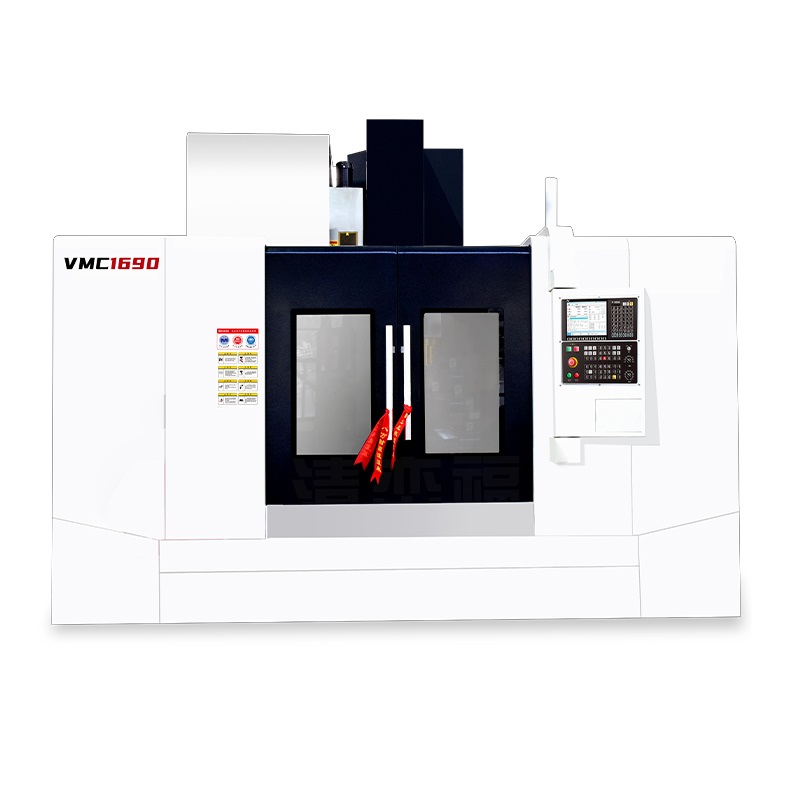
VMC650 to VMC1890: Where the BONANZA VMC Range Switches From BT40 to BT50
Most shops pick a vertical machining centre by table size, then get stuck on the spindle taper. In the BONANZA VMC range that decision is easier than it looks. The BT40-to-BT50 step is not buried in the middle of the model list. It happens at one clean point, and the spec tables show it in three numbers at once: rapid traverse, machine weight, and table load.
What follows is the published data from the product pages of the range, laid out side by side, plus the places where those pages leave a gap or contradict themselves. No estimated figures.
The published numbers, model by model
| Model | Table (mm) | Max load (kg) | X / Y / Z travel (mm) | Rapids X / Y / Z (m/min) | Taper | Spindle (rpm) | Weight (kg) |
|---|---|---|---|---|---|---|---|
| VMC650 | 1000 × 400 | 400 | 650 / 400 / 550 | 32 / 32 / 24 | BT40 Φ120 | 8,000 | 3,800 |
| VMC855 | 1000 × 550 | 600 | 800 / 550 / 550 | 32 / 32 / 24 | BT40 Φ150 | 8,000 | 5,300 |
| VMC855D | 1000 × 550 | 600 | 800 / 550 / 550 | 32 / 32 / 24 | BT40 Φ150 | 8,000 | 5,300 |
| VMC1160 | 1200 × 600 | 800 | 1100 / 600 / 600 | 24 / 24 / 18 | BT40 Φ150 | 8,000 | 6,500 |
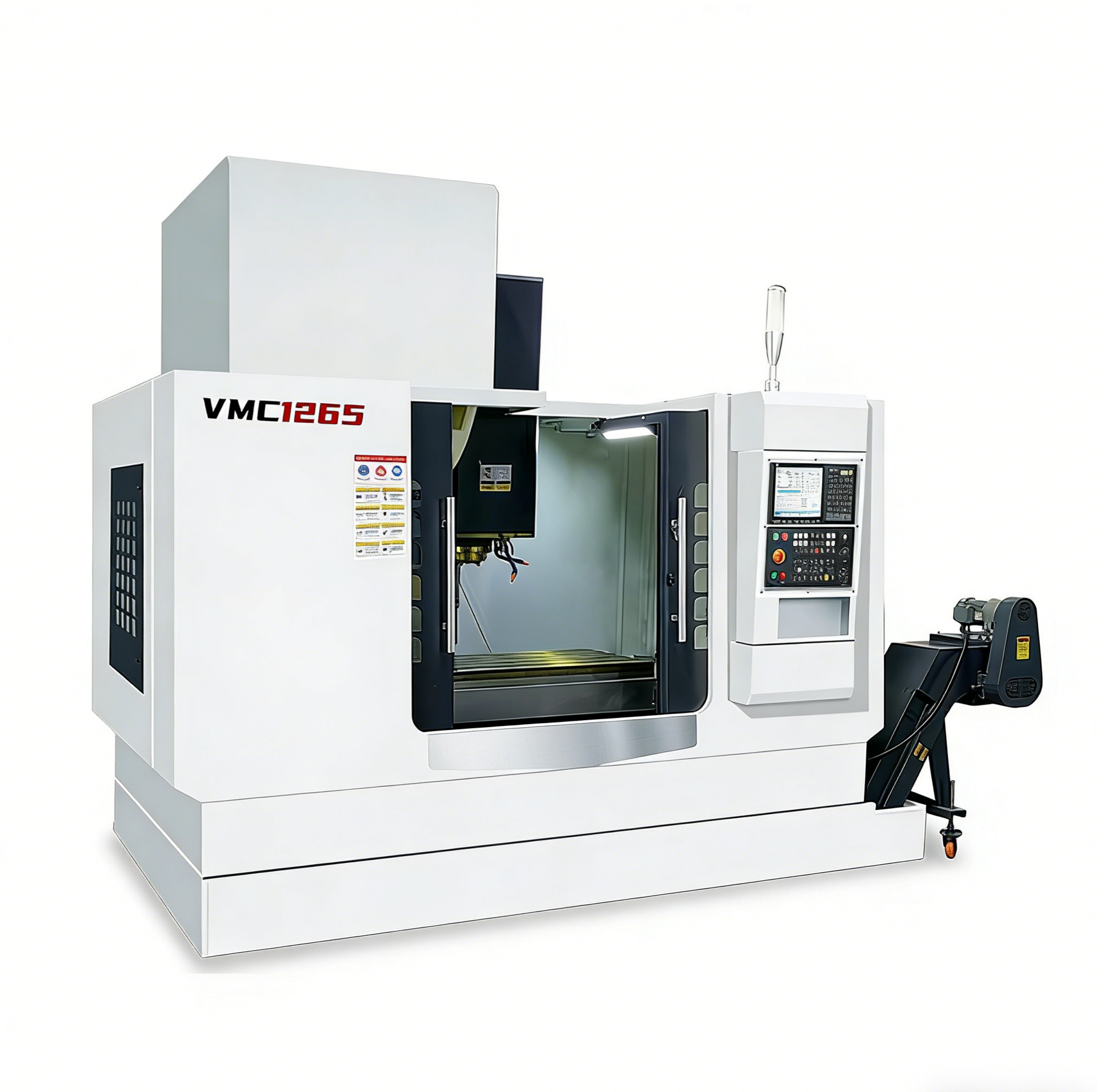
| VMC1265 | 1200 × 600 | 800 | 1200 / 650 / 650 | 24 / 24 / 18 | BT40 Φ150 | not listed | 6,800 |
| VMC1265D | 1200 × 600 | 800 | 1200 / 650 / 650 | 24 / 24 / 18 | BT40 Φ150 | not listed | 6,800 |
| L1265 | 1200 × 600 | 800 | 1200 / 650 / 650 | 24 / 24 / 18 | BT40 Φ150 | not listed | 6,800 |
| VMC1370 | 1400 × 700 | 800 | 1300 / 700 / 750 | 24 / 24 / 18 | BT40-150 | 8,000 | 9,000 |
| VMC1370D | 1400 × 700 | 800 | 1300 / 700 / 750 | 24 / 24 / 18 | BT40-150 | 8,000 | 9,000 |
| VMC1560 | 2200 × 600 | 1500 | 1500 / 650 / 650 | 24 / 24 / 18 | BT40-150 | not listed | not listed |
| VMC1690 | 1600 × 800 | 1500 | 1600 / 900 / 700 | 20 / 20 / 14 | BT50-190 | 6,000 | 12,000 |
| L1690 | 1600 × 800 | 1500 | 1600 / 900 / 700 | 20 / 20 / 16 | BT50-190 | 6,000 | not listed |
| VMC1890 | 2000 × 900 | 1600 | 1800 / 900 / 600 | 20 / 20 / 15 | BT50-190 | 6,000 | 14,000 |
The taper changes at 1,500 kg, not at a table size
Line up the models by table length and the BT50 group starts at the VMC1690. That is a 1,600 mm table, and the VMC1560 has a longer one at 2,200 mm while staying on BT40. So table length is not the dividing line.
The cleaner rule is table load and machine mass. Every BT40 model in the range is rated 400 to 1,500 kg and weighs 3,800 to 9,000 kg. The three BT50 models are rated 1,500 to 1,600 kg and weigh 12,000 to 14,000 kg, or in the L1690’s case the page publishes no weight at all.
Between the heaviest BT40 machine and the lightest BT50 one there is a 3,000 kg jump in casting. That jump is the real content of the decision. The taper is the visible part of a package that includes a bigger column, wider guide spacing and a heavier base.
The BT50-190 spindle on these three runs at 6,000 rpm. The BT40 models run at 8,000 rpm. That 2,000 rpm gap is the trade being made: BT50 tooling is heavier and the spindle assembly that carries it needs more material to stay stiff at speed, so the top end comes down. If your work is aluminium at high spindle speeds, that is the wrong trade. If it is 160 mm face mills in steel and interrupted cuts through castings, it is the right one.
Rapid traverse marks the same boundary
The rapids fall in three distinct bands, and each band belongs to a size class:
- 32 / 32 / 24 m/min on the VMC650 and VMC855, where travels are short enough to reach those speeds and stop again inside the stroke
- 24 / 24 / 18 m/min across the 1160, 1265, 1370 and 1560 models, the middle of the range
- 20 / 20 / 14 to 16 m/min on the BT50 machines, where moving 12 to 14 tonnes of cast iron at 32 m/min would cost servo torque better spent on cutting
One detail worth reading carefully: on the VMC1890 the Z rapid is 15 m/min, higher than the VMC1690’s 14, even though the 1890 is the heavier machine with a longer X. Z is the shortest stroke on both, so it is the axis with room to run faster. The X and Y figures on the two machines are identical at 20 m/min.
Table length is not the same as cutting zone
The VMC1560 has a 2,200 mm table and 1,500 mm of X travel. That means 700 mm of table surface never passes under the spindle. It is not a defect. It is how you mount a long shaft or a weldment with the overhang supported.
But if you plan to clamp two vises at opposite ends of that table and run them as separate setups, only 1,500 mm of the 2,200 will ever be cut. The number that decides your fixturing layout is travel, not table length.
At the other extreme, the VMC1265 and VMC1690 both publish X travel equal to table length, 1,200 mm and 1,600 mm respectively. On those, the full table can pass the spindle, which is what you want for plate work where the part is as long as the table.
Mass per millimetre of X travel
Divide machine weight by X travel and a pattern shows up that the spec sheet does not state directly. The VMC1265 comes out at roughly 5.7 kg per millimetre of X travel, the VMC1370 at 6.9, the VMC1690 at 7.5 and the VMC1890 at 7.8.
That figure is a crude proxy, but it tracks what a machinist feels: how much iron is behind the cut at the far end of the stroke. That is where light machines show chatter first.
For a shop moving from a 650-class machine to a 1370, the practical change is not the extra X travel. It is that the same cutter and the same depth of cut behave the same way at the end of the stroke as in the middle.
What the published tables do not settle
Several pages in this range need confirmation before an order, and it is worth naming them rather than guessing:
- The VMC855 and VMC855D pages list Y-axis travel as “55” mm. Every other figure on those pages, including the 1,000 × 550 mm table, points to 550 mm. Treat it as a typo and get it confirmed in writing.
- The VMC855 page lists positioning accuracy of 0.020 mm on X, 0.008 mm on Y and 0.017 mm on Z. The VMC1160 lists 0.053 mm on X against 0.014 mm on Y. A spread that wide within one machine is not how a three-axis VMC behaves, so those rows should not be used as a specification until the factory supplies a test report, ideally to ISO 230-2 or JIS B 6336.
- VMC1265, VMC1265D and L1265 publish identical tables, as do VMC1370 and VMC1370D. The difference between the D and non-D versions, and where the L version differs, is not documented on the site.
- The VMC1560 page gives no spindle speed, no machine dimensions and no weight.
- Spindle power and torque curves, ATC station count and maximum tool size, guideway type and controller model are not published for most models in the range.
Choosing between the two groups
For parts up to about 800 kg on tables from 1,000 to 1,400 mm, in aluminium, mild steel and pre-hardened tool steel, with a high mix of jobs, the BT40 machines cover the ground and give you 8,000 rpm and 24 to 32 m/min rapids. The VMC1160 and VMC1370 are the two that carry most of that work.
For long parts that need support beyond the cutting zone, the VMC1560’s 2,200 mm table does a job no other model in the range does.
For castings at 1,500 kg and up, for face mills of 160 mm and above in steel, and for interrupted cuts where the insert takes a hammering, the VMC1690 and VMC1890 are the machines built for it. The 1890 adds 200 mm of X and 200 kg of table capacity over the 1690 for 2,000 kg more cast iron.
The full list with dimensions sits on the vertical machining centre series page. If you send the part drawing, the material and the batch size through the contact page, the open items above can be answered against a specific job instead of a generic data sheet.