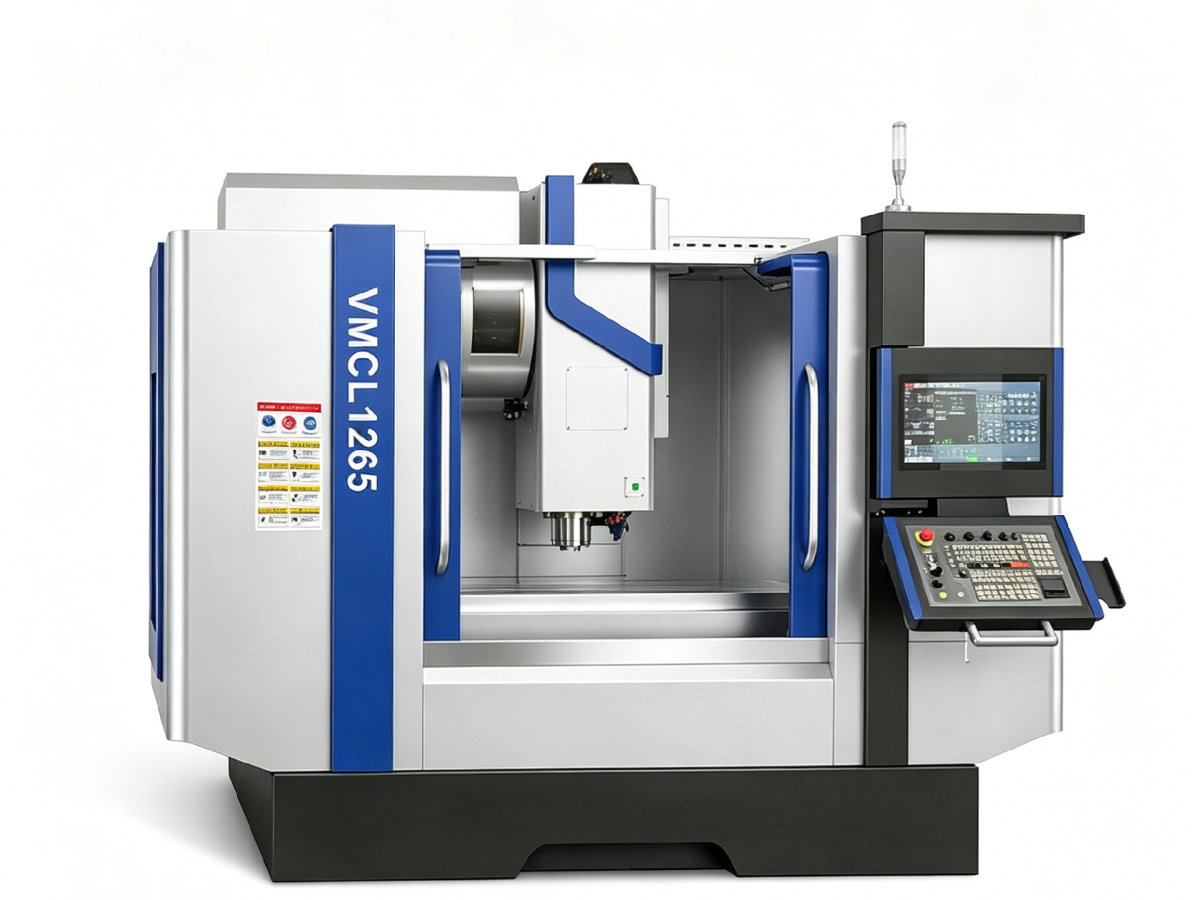
L1265, 1265D and 1370D Vertical Machining Centers – How to Choose Between a 1,200 mm and a 1,400 mm Table | BONANZA CNC
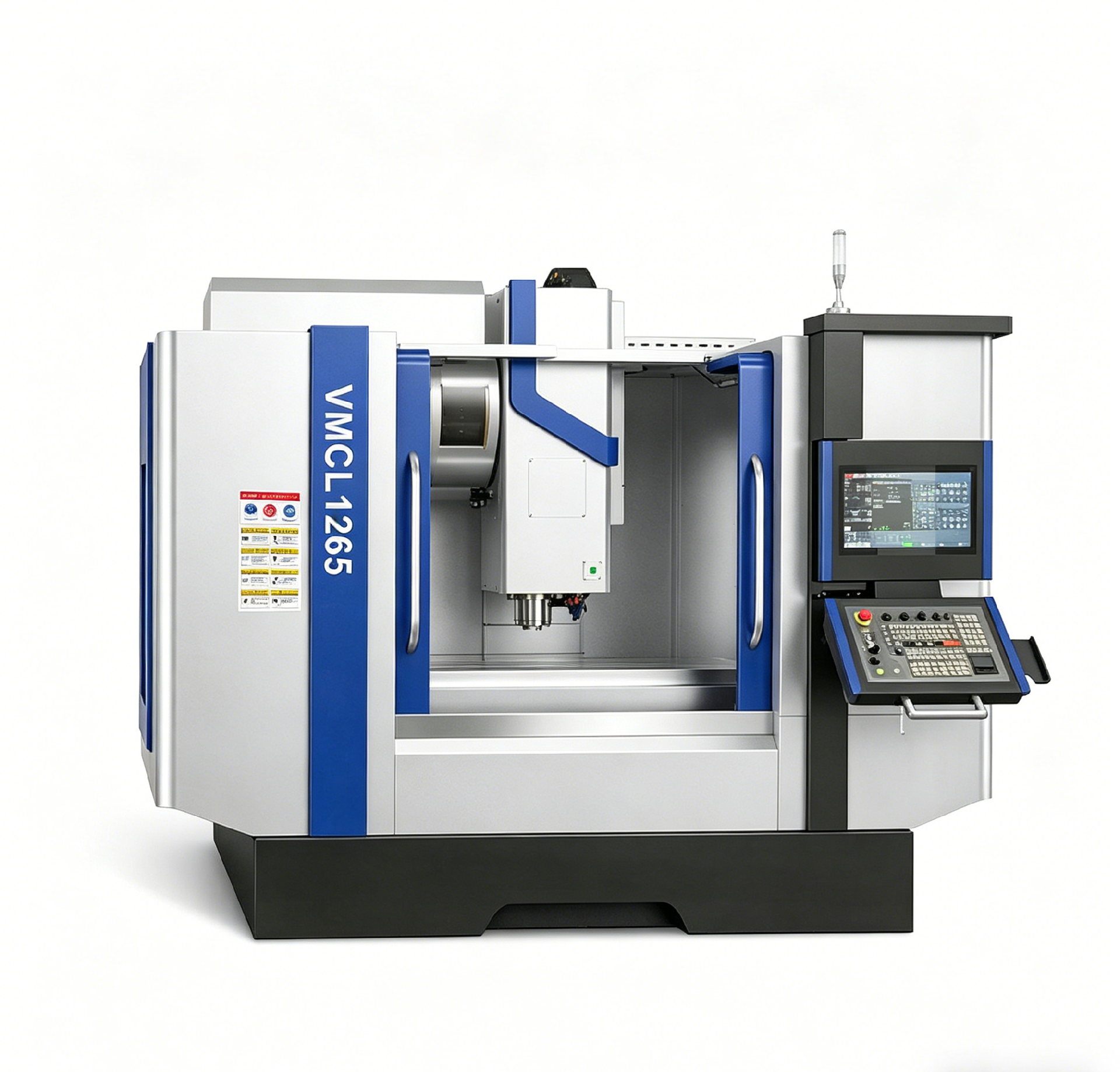
Most shops arrive in the 1,200 mm table class from below. They have been running an 800 mm machine, the fixtures have grown, and the next job does not fit any more. BONANZA lists three vertical machining centers with a 1,200 x 600 mm table, the L1265, the 1265 and the 1265D, plus two with a 1,400 x 700 mm table, the 1370 and the 1370D.
The published envelope figures for the three 1,200 mm models are the same, and so are the figures for the two 1,400 mm models. That makes the decision easier than the model count suggests, and it moves the real question elsewhere: what do the extra 200 mm of table and the extra 2,200 kg of iron buy you at the spindle?
The 1,200 mm class: L1265, 1265 and 1265D
All three models publish a 1,200 x 600 mm table rated to 800 kg, with T-slots at 5-18-100 mm, travels of 1,200 / 650 / 650 mm on X, Y and Z, rapids of 24 / 24 / 18 m/min, a BT40Φ150 spindle taper, an overall size of 3,300 x 2,600 x 3,360 mm and a machine weight of 6,800 kg. Whatever separates the three names, it is not the envelope, and it is not the mass.
That envelope covers a lot of general work. A 600 mm deep table at 800 kg handles a stack of plate, a cast iron housing, or a fixture with the part still bolted in place, and the 100 mm slot spacing takes standard 18 mm clamps without adapters. On X, 1,200 mm of travel against a 1,200 mm table is not wasted stroke. The table moves under a fixed column, so the figure is what lets you reach both ends of the part before the work runs out from under the spindle, which is how you park a vise at each end and load the second job while the first one cuts.
Because the three pages publish the same table, treat them as one machine envelope and ask the factory what actually differs: spindle drive and top speed, tool magazine capacity, controller model, guarding and chip management. Those are the items that move price, and none of them appear on the product pages.
The step up: 1370 and 1370D
The 1,400 mm pair publishes a 1,400 x 700 mm table, also rated to 800 kg, with wider 5-18-130 mm T-slots, travels of 1,300 / 700 / 750 mm, the same 24 / 24 / 18 m/min rapids, a BT40-150 spindle running to 8,000 rpm, an overall size of 3,550 x 2,730 x 2,620 mm and a machine weight of 9,000 kg.
The honest way to read that step is as a mass purchase. You gain 100 mm of table length, 100 mm of Y and 100 mm of X, 200 mm of extra Z, and 2,200 kg of cast iron, for a footprint only 250 mm longer and 130 mm wider. The 800 kg load rating does not change, so the extra capacity is not about heavier parts. It is about damping and reach. Every kilogram in the base and column adds stiffness, and on 1370-class work that is what shows up when you push a 50 mm face mill through steel or hold a finish on a deep cavity. The 130 mm slot spacing also takes larger clamps, which matters as fixtures get longer.
Where both classes sit in the vertical range
The table below puts the two classes next to the machines immediately below and above them. Every figure comes from the individual product page.
| Model | Table | Max. load | X / Y / Z travel | Rapid X / Y / Z | Spindle | Weight |
|---|---|---|---|---|---|---|
| 855D | 1,000 x 550 mm | 600 kg | 800 / 55* / 550 mm | 32 / 32 / 24 m/min | BT40Φ150, 8,000 rpm | 5,300 kg |
| 1160 | 1,200 x 600 mm | 800 kg | 1,100 / 600 / 600 mm | 24 / 24 / 18 m/min | BT40Φ150, 8,000 rpm | 6,500 kg |
| L1265 / 1265 / 1265D | 1,200 x 600 mm | 800 kg | 1,200 / 650 / 650 mm | 24 / 24 / 18 m/min | BT40Φ150 | 6,800 kg |
| 1370 / 1370D | 1,400 x 700 mm | 800 kg | 1,300 / 700 / 750 mm | 24 / 24 / 18 m/min | BT40-150, 8,000 rpm | 9,000 kg |
| 1560 | 2,200 x 600 mm | 1,500 kg | 1,500 / 650 / 650 mm | 24 / 24 / 18 m/min | BT40-150 | Not published |
| 1690 | 1,600 x 800 mm | 1,500 kg | 1,600 / 900 / 700 mm | 20 / 20 / 14 m/min | BT50-190, 6,000 rpm | 12,000 kg |
* The 855D product page publishes Y travel as 55 mm against a 550 mm table, which is a typographical error on the page rather than a real figure. It is reproduced here so the table matches the source; confirm the true value before quoting a job.
Two patterns are worth noting. The 1,200 mm class splits in two: the 1160 keeps a shorter 1,100 mm X stroke at 6,500 kg, while the L1265 family adds 100 mm of X, 50 mm of Y and 300 kg of iron for the same 800 kg table rating. And the spindle class changes at 1,600 x 800 mm, where the BT50-190 nose takes over and rapids drop from 24 to 20 m/min. Below that, the whole range runs the same 24 / 24 / 18 m/min rapid set, so rapids are not a differentiator inside the 1,200 and 1,400 mm classes.
Accuracy figures: published, but read them carefully
Some pages in the range publish positioning accuracy and some do not. The 855 page lists X 0.020, Y 0.008 and Z 0.017 mm; the 1160 page lists X 0.053, Y 0.014 and Z 0.010 mm. Both sets look inconsistent, because on a square VMC the axes are not normally built or measured to figures that far apart. The L1265, 1265, 1265D, 1370 and 1560 pages publish no accuracy data at all.
That does not mean the machines are inaccurate. It means the published numbers cannot be used as a purchasing specification. Ask for the positioning and repeatable positioning accuracy on all three axes, the inspection standard the figures are certified against, and a copy of the acceptance report for the machine being quoted. Any tolerance commitment that is not in writing on the order is not a commitment.
What the product pages leave open
Across both classes, the published sheets cover the envelope, table, T-slots, travels, rapids, spindle taper and machine weight. The following are not published and should be confirmed in writing before an order:
- Spindle motor power and the torque curve behind the published top speed. The 1370 and 1370D pages give 8,000 rpm; the L1265 family does not publish a speed at all.
- Tool magazine capacity, tool-to-tool and chip-to-chip change times, and the maximum tool diameter and weight the magazine accepts.
- Control model and version, and which functions are included as standard.
- What actually separates the L1265, 1265 and 1265D, and the 1370 from the 1370D, since the published envelope figures are identical within each pair.
- Machine weight for the 1560, needed for foundation and freight planning.
- The standard and optional list covering through-spindle coolant, chip conveyor, spindle oil cooler and the fourth axis interface.
Which one to specify
Three rules cover most cases. If the largest part fits a 1,000 x 550 mm table, the 855D at 5,300 kg keeps the floor space and the price down. If the part needs about 1,200 mm of reach and standard 18 mm clamping, the L1265 class is the right envelope, with the 1160 as the lighter option when 1,100 mm of X is enough. If the work is long in Y as well as X, or the finish has to hold through a roughing pass on a deep cavity, the 1370D buys the table and the 9,000 kg base for it. For genuinely long parts, the 1560 stretches the table to 2,200 mm on the same 600 mm depth, and for parts past 1,400 mm in both directions the BT50-190 1690 takes over.
Bottom line
The 1,200 mm and 1,400 mm BONANZA verticals are not separated by rapids, T-slot hardware or table load, because those figures are shared. They are separated by 2,200 kg of structure and about 100 mm in each direction, which is the difference between reaching a part and having to reposition it. Pick the envelope the part needs, then pin down the spindle drive, the magazine and the accuracy report before the order goes in, because those are the three items the pages leave blank.
Full figures are on the L1265 and 1370D product pages, and the rest of the range is listed under Vertical Machining Centers. Send the part drawing with the fixture weight and the annual volume through the contact page, and the spindle specification, magazine size and accuracy commitment can be confirmed in writing for your application.