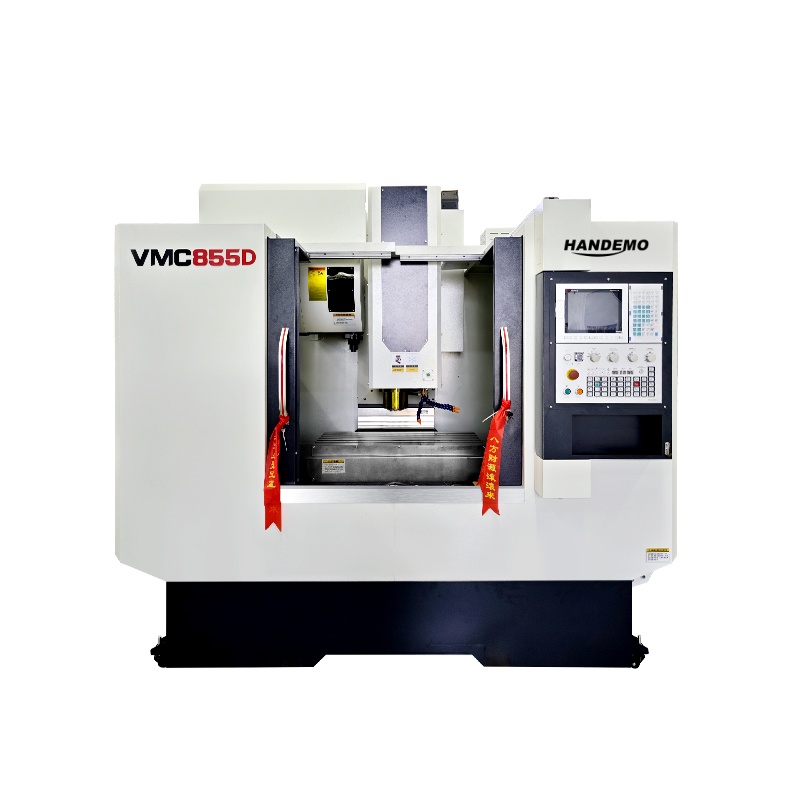
855D Vertical Machining Center: 800 mm of X Travel on a 5,300 kg BT40 Frame
The 855D Vertical Machining Center is the middle of the BONANZA VMC range: a 1,000 × 550 mm table rated to 600 kg, 800 mm of X travel, a BT40 Ø150 taper spindle at 8,000 rpm, and a 5,300 kg cast frame underneath all of it. Rapid traverse is 32 m/min in X and Y, 24 m/min in Z.
Those numbers put it in a specific place: not a 650-class light machine, not a BT50 heavy cutter. It is the size that fits a real mould insert, a steel housing or an aluminium fixture plate, on the same floor space as machines that carry less weight.
855D at a glance
| Parameter | 855D |
|---|---|
| Table size | 1,000 × 550 mm |
| Max. worktable load | 600 kg |
| X-axis travel | 800 mm |
| Y-axis travel | 55 mm (as published; see note below) |
| Z-axis travel | 550 mm |
| X / Y rapid traverse | 32 m/min |
| Z rapid traverse | 24 m/min |
| Spindle taper | BT40 Ø150 |
| Spindle speed | 8,000 rpm |
| Machine size | 2,600 L × 2,380 W × 2,400 H mm |
| Machine weight | 5,300 kg |
Why 5,300 kg is the number that matters most
Spec sheets lead with travel and spindle speed, but on a machining center the base casting decides how much of that travel you can actually use. The 855D carries 5,300 kg in a 2,600 × 2,380 × 2,400 mm envelope. For comparison, the 650 at the bottom of the range weighs 3,800 kg and the 1160 above it weighs 6,500 kg.
Cast iron mass is damping. When a face mill enters a steel plate and the insert loads and unloads, the frame either absorbs that energy or rings with it. A heavier frame is the difference between a finish pass that comes off clean and one showing vibration marks the operator has to blend out.
The trade-off is floor loading and rigging: at 5,300 kg on a 2,600 mm footprint the 855D is a machine you plan a position for, not one you slide around the shop.
800 mm of X travel on a 1,000 mm table
X travel of 800 mm against a 1,000 × 550 mm table is a practical ratio: the table is longer than the stroke, so the ends stay supported at full travel. Where a shop gets into trouble is buying a 1,000 mm table and expecting to machine a 1,000 mm part on it. Fixture clamps take space, the tool needs clearance at both ends of the cut, and the 600 kg rating counts the fixture as well as the workpiece. Plan a part around 700 mm in X and the 855D has room to spare.
The Y figure deserves a note. The 855D sheet publishes Y travel as 55 mm, while the 855 page, which shares the same VMC855 specification table, describes the machine as having 800/550/550 mm travels in its product text. Three digits are missing a zero somewhere, and it matters: 55 mm of Y travel would make the machine unusable for anything but a single line of holes, while 550 mm puts it in the general-purpose class. This is a documentation discrepancy on the website, not a machine change, but it needs to be resolved in writing before you order.
8,000 rpm BT40: what this spindle is for
BT40 at 8,000 rpm with a Ø150 spindle nose is the standard general-purpose combination, and it is standard because it covers the widest range of work. In aluminium, 8,000 rpm with a 20 mm end mill gives a surface speed that clears chips properly. In steel, the same spindle runs a 63 mm face mill or a 16 mm carbide end mill at production feed rates.
What you should not read into it is high-speed finishing. This is not a 15,000 or 20,000 rpm spindle, so small-diameter tools in hardened material will run out of surface speed before they run out of feed. The published sheet also does not state spindle power, drive type or maximum torque, and those three numbers decide what the machine does in steel far more than the rpm figure does.
Rapid traverse and cycle time
32 m/min in X and Y with 24 m/min in Z is above average for this table size. On a part with a lot of short moves, pocketing or drilling patterns, rapid speed compounds across a shift. A machine at 20 m/min doing 400 mm moves loses measurable minutes per part against one at 32 m/min, and those minutes are the easiest cost to remove from a job.
Where the 855D sits in the BONANZA VMC range
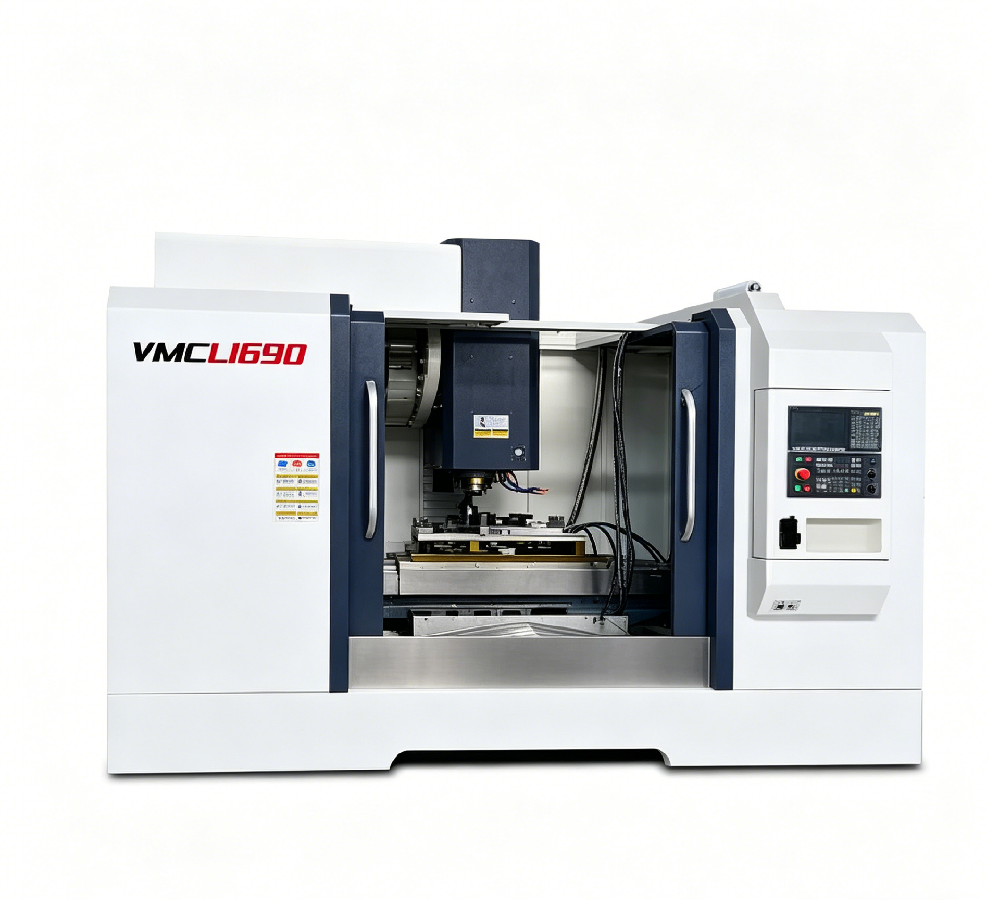
The vertical machining center series runs from the 650 up to the 1890, and the published figures show how the machines step up:
| Model | Table | Max. load | X / Y / Z travel | Spindle | Weight |
|---|---|---|---|---|---|
| 650 | 1,000 × 400 mm | 400 kg | 650 / 400 / 550 mm | BT40Ø120, 8,000 rpm | 3,800 kg |
| 855D | 1,000 × 550 mm | 600 kg | 800 / 55 / 550 mm | BT40Ø150, 8,000 rpm | 5,300 kg |
| 855 | 1,000 × 550 mm | 600 kg | 800 / 55 / 550 mm | BT40Ø150, 8,000 rpm | 5,300 kg |
| 1160 | 1,200 × 600 mm | 800 kg | 1,100 / 600 / 600 mm | BT40Ø150, 8,000 rpm | 6,500 kg |
| 1370D | 1,400 × 700 mm | 800 kg | 1,300 / 700 / 750 mm | BT40-150, 8,000 rpm | 9,000 kg |
| 1560 | 2,200 × 600 mm | 1,500 kg | 1,500 / 650 / 650 mm | BT40-150 | — |
| 1690 | 1,600 × 800 mm | 1,500 kg | 1,600 / 900 / 700 mm | BT50-190, 6,000 rpm | 12,000 kg |
| 1890 | 2,000 × 900 mm | 1,600 kg | 1,800 / 900 / 600 mm | BT50-190, 6,000 rpm | 14,000 kg |
The step from the 855D to the 1160 buys a 1,200 × 600 mm table, 200 kg more load and 300 mm more X travel for 1,200 kg of extra iron. The 1370D is the point where the frame reaches 9,000 kg and the travel envelope opens up in all three axes, and above that the machines switch to BT50 for heavy cutting.
Note that the 855D and 855 publish an identical specification table. If both appear in a quotation, ask the sales team to state the difference between them in writing before deciding, because the published figures do not show one.
What to confirm before you order
The published sheet is strong on geometry and weight and silent on several things that decide performance:
- The Y-axis travel figure, which is published as 55 mm on the 855D sheet and as 550 mm in the 855 product text. Get the correct number in writing.
- Spindle power, torque and drive type. None of the three is published.
- Spindle motor and cooling arrangement, which decides how the machine holds accuracy through a long shift.
- Automatic tool changer capacity and type. The 650 publishes a 16-station disc and the 855 publishes 24 stations; the 855D sheet does not say.
- Guideway type, linear or box, on each axis.
- Positioning and repeat positioning accuracy and the acceptance standard behind them. The 855 page publishes 0.020 / 0.008 / 0.017 mm and the 1160 publishes 0.053 / 0.014 / 0.010 mm, so these values vary by machine and should be quoted per model.
- Available options such as through-spindle coolant, chip conveyor and oil cooler.
- The CNC controller and its configuration.
Frequently asked questions
How big a part can the 855D machine?
Plan around 700 mm in X once a fixture is on the 1,000 × 550 mm table. The table carries 600 kg including the fixture and the X stroke is 800 mm. The Y travel figure is published inconsistently and needs confirmation before you quote a part against it.
Is the 855D rigid enough for steel?
The 5,300 kg frame and BT40 spindle put it in the medium-duty class. It will run production cuts in steel and cast iron with appropriate tooling, and it is comfortable in aluminium. Deep interrupted cuts in large steel parts belong further up the range, where the BT50 machines start.
What is the difference between the 855D and the 855?
The published specification tables are identical. The BONANZA team should confirm the actual difference in drive configuration and options in writing, since the website currently does not distinguish them.
Bottom line
The 855D is a 1,000 × 550 mm table on 800 mm of X travel, carrying 600 kg on a 5,300 kg frame with a BT40 8,000 rpm spindle and 32 m/min rapids. It is the general-purpose size for mould work, steel housings and fixture plates, and it steps up cleanly to the 1160 or 1370D when parts get bigger.
Send the BONANZA team your part drawings, material and fixture weight. They can confirm the Y-axis travel and spindle figures, tell you whether the 855D or the 1160 fits the envelope, and quote the configuration that suits the work.