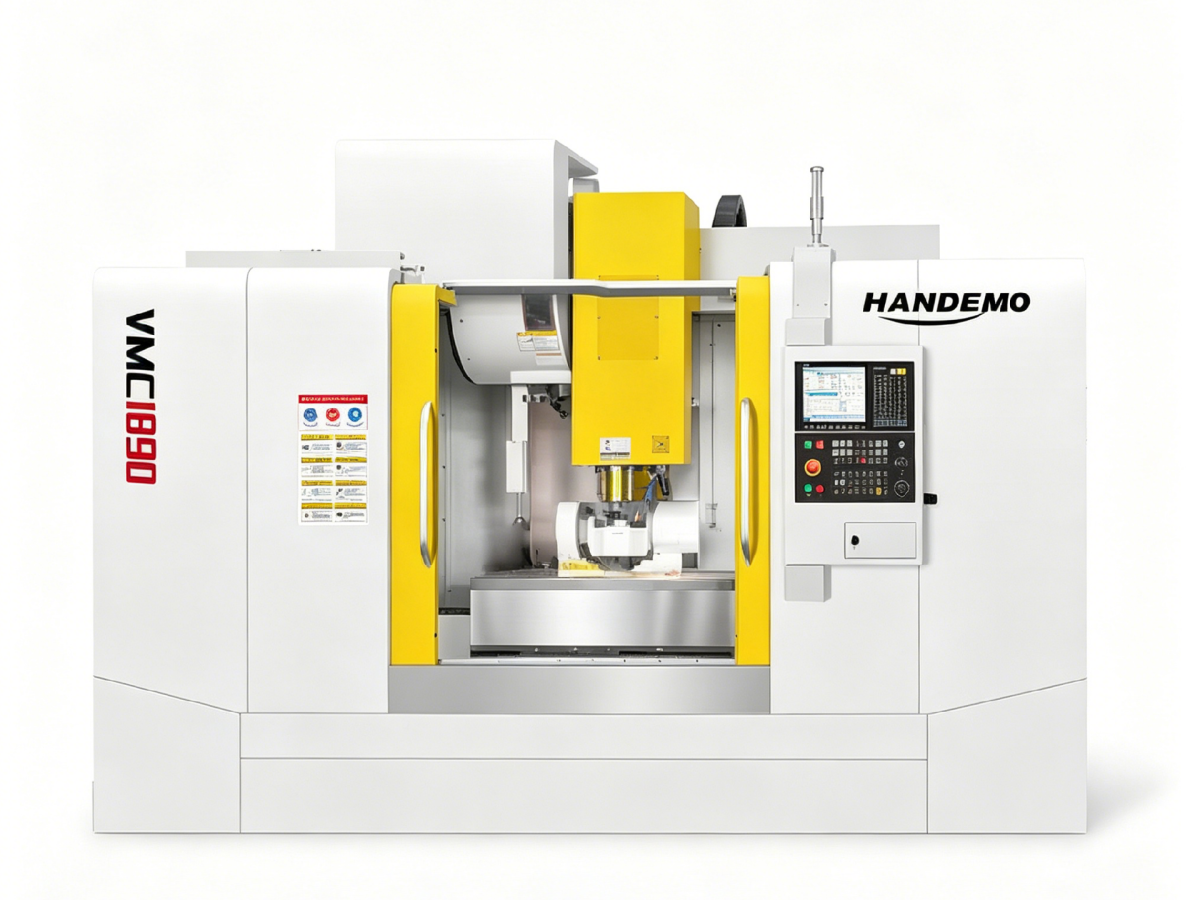
1890 Vertical Machining Center: 1,800 mm of X Travel on a 14,000 kg BT50-190 Frame
Ask a shop why it walked away from a job and the answer is often reach, not spindle speed. The part fits on the table. The tool simply cannot get to the far end of it. The BONANZA 1890 Vertical Machining Center goes at that problem directly: a 2,000 × 900 mm table, 1,800 mm of X travel, a BT50-190 spindle, and 14,000 kg of cast iron underneath it.
Here is what the published numbers say, and where they matter once a real part is clamped down.
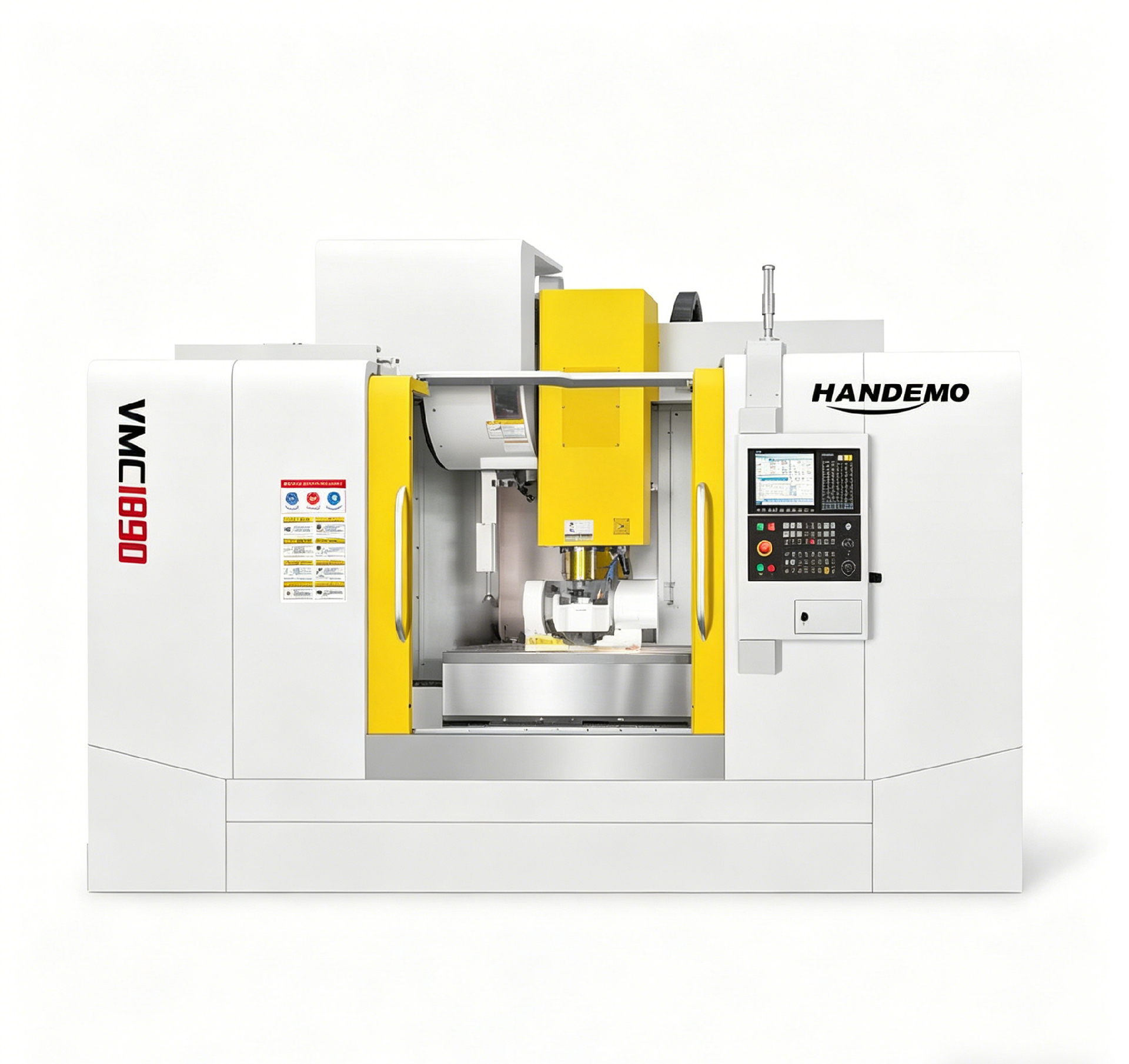
1890 at a glance
| Parameter | 1890 |
|---|---|
| Table size | 2,000 × 900 mm |
| Max. worktable load | 1,600 kg |
| X-axis travel | 1,800 mm |
| Y-axis travel | 900 mm |
| Z-axis travel | 600 mm |
| X / Y rapid traverse | 20 / 20 m/min |
| Z rapid traverse | 15 m/min |
| Spindle taper | BT50-190 |
| Spindle speed | 6,000 rpm |
| Machine size | 5,000 × 3,000 × 2,900 mm |
| Machine weight | 14,000 kg |
The table is where this machine earns its money
Two numbers decide whether a vertical machining center suits a job: table size and table capacity. The 1890 lists 2,000 × 900 mm and 1,600 kg. For long weldments, wide plates, or a fixture carrying several small parts at once, the table does more for throughput than any spindle upgrade will.
A 2,000 mm table with 1,800 mm of X travel means you can clamp a long fixture at one end and still reach the far corner, which is often the exact reason a 1,300 mm machine loses the job. You can also index a long part between two setups without unclamping anything, because the table already covers the full length.
The 1,600 kg load rating is 100 kg above the 1,690 in the same series. If heavy blocks arrive on a pallet and get lifted straight onto the table, that headroom is worth checking against your heaviest setup.
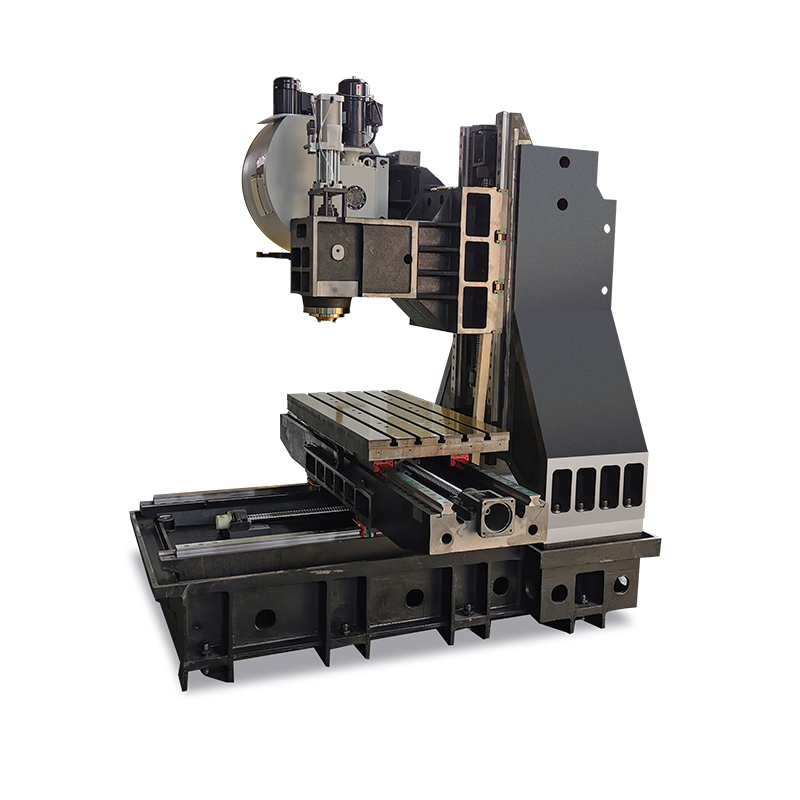
A BT50-190 spindle at 6,000 rpm
The 1890 runs a BT50-190 spindle at 6,000 rpm. The BT50 taper is why this class of machine exists. Against a BT40 spindle, the larger taper takes bigger tools with longer gauge lengths and holds them rigid in heavy cuts, which is exactly what happens when you are removing material from a 1,600 kg block on a 2,000 mm table.
The “190” in BT50-190 is the spindle nose outside diameter in millimetres. A short nose puts the tool closer to the front bearing, so cutting load travels a shorter path into the spindle. On face milling and deep shoulder work that shows up as less chatter and longer tool life.
One honest note on the spec sheet: spindle motor power and torque are not published for the 1890. The same BT50-190 spindle appears on the 1690, where BONANZA documents a 15 kW motor with a 1,000 rpm low-speed high-torque winding and a 50% torque increase for heavy cutting. If your work is heavy roughing, ask for the 1890 motor rating in writing at quote stage rather than assuming the two machines are identical inside.
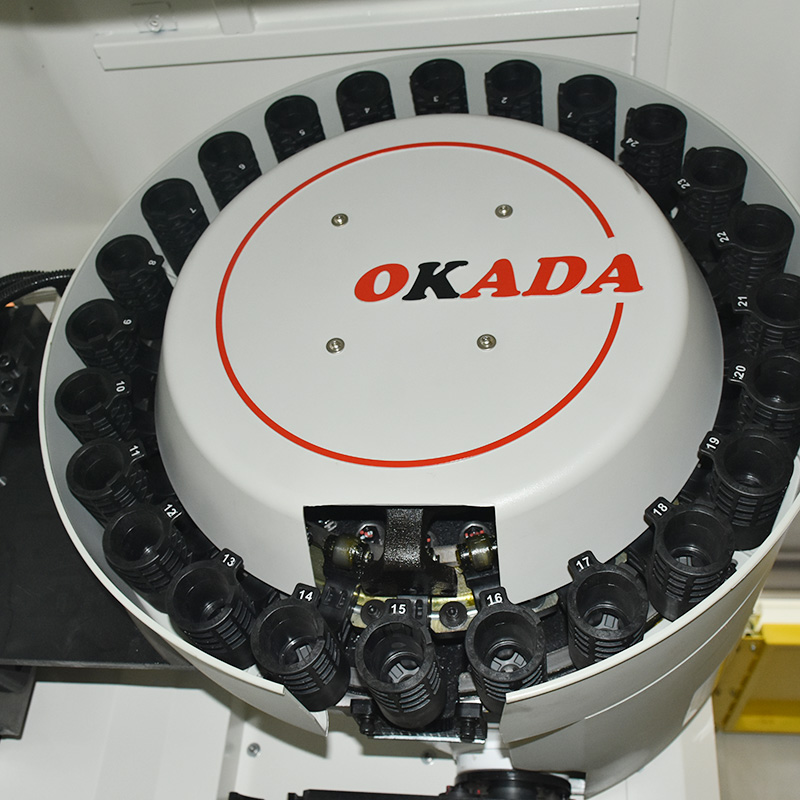
Rapid traverse on a heavy frame
Rapids are 20 m/min on X and Y and 15 m/min on Z. Set next to a smaller vertical such as the 1160 or the 1370D, both of which run 24/24/18 m/min, the 1890 is slower, and that is the trade that comes with a 14,000 kg frame and a BT50 spindle. What you get back is stability: a 1,800 mm X traverse takes about 5.4 seconds.
Where the 1890 sits in the BONANZA VMC range
The vertical machining center series steps up in a clear order:
- 855: 1,000 × 550 mm table, 600 kg load, BT40 spindle at 8,000 rpm, 32 m/min rapids.
- 1160: 1,200 × 600 mm table, 800 kg, 1,100/600/600 mm travel, BT40 Φ150 spindle, 8,000 rpm, 6,500 kg.
- 1560: a long table for the class at 2,200 × 600 mm, 1,500 kg load, 1,500/650/650 mm travel, BT40-150 spindle, 24/24/18 m/min rapids.
- 1690: 1,600 × 800 mm table, 1,500 kg, 1,600/900/700 mm travel, BT50-190 at 6,000 rpm, 12,000 kg.
- 1890: 2,000 × 900 mm table, 1,600 kg, 1,800/900/600 mm travel, BT50-190 at 6,000 rpm, 14,000 kg.
The 1890 and the 1690 look close on paper. The 1890 adds 400 mm of table length, 200 mm of X travel, 100 kg of table capacity, and 2,000 kg of machine weight, and gives up 100 mm of Z travel, 700 mm on the 1690 against 600 mm here. If your parts are long and flat, the 1890 is the better fit. If you need the extra Z clearance for tall workpieces or long tool assemblies, the 1690 answers that instead.
Who the 1890 suits
- Parts longer than a metre that currently need two setups
- Workpieces in the 800 to 1,600 kg range, with a table rating that clears them without guesswork
- BT50 tooling and heavy face milling, where a BT40 spindle has become the limit on depth of cut
- A 5,000 × 3,000 mm footprint and one large machine instead of two smaller ones
If your parts are small and you need fast, light cycles, a 1160 will make them faster and for less money. The 1890 makes sense when the part is large, the material is tough, or both.
What to confirm before you order
The published spec covers table, travel and spindle well. A few things that matter at installation are not on the sheet, so settle them at quote stage:
- Spindle motor power and torque rating, if heavy roughing is part of the plan
- Tool magazine capacity and tool holder style for your build
- Positioning and repeat accuracy figures for your machine
- Foundation and rigging: at 14,000 kg, floor loading and door clearance need planning before delivery
Frequently asked questions
How much weight can the 1890 table carry?
1,600 kg on a 2,000 × 900 mm table, which covers most large plate, weldment and casting work in this size class.
What is the difference between the 1890 and the 1690?
The 1890 has a longer table and X axis, 2,000 × 900 mm and 1,800 mm against 1,600 × 800 mm and 1,600 mm, plus 100 kg more table capacity and 2,000 kg more machine weight. The 1690 has 100 mm more Z travel.
Is the 1890 a 3-axis or multi-axis machine?
It is a 3-axis vertical machining center. BONANZA describes it as capable of multi-axis control for cutting in several directions, so if you need a fourth or fifth axis, raise it with the factory when you request the quote.
Bottom line
The 1890 is the largest vertical machining center in the BONANZA range, aimed at shops whose problem is part size rather than cycle time. A 2,000 × 900 mm table rated to 1,600 kg, 1,800 mm of X travel, and a BT50-190 spindle on a 14,000 kg frame give you room to clamp the part, reach the whole of it, and cut it without the machine moving under the tool.
If you have a part that keeps missing the cut-off, send the BONANZA team the drawing with material, part weight, and finished size. You will get a straight answer on whether the 1890 Vertical Machining Center fits the job, or whether the 1690 or a long-table 1560 is the better match.