1690 Vertical Machining Center: Heavy-Duty BT50 Spindle for Parts That Need Real Cutting
Big parts have a way of exposing a machine. A 600 mm part on a small VMC means conservative depth of cut, lighter passes, longer cycle times, and the constant worry that the spindle will stall in the middle of a roughening pass. The BONANZA 1690 vertical machining center takes a different route: instead of stretching a BT40 machine to the limit, it starts with a BT50-190 spindle, a 12-tonne base, and a table that takes 1500 kg. It is sized for work that genuinely needs that hardware.
Here is what the 1690 actually brings, and where the numbers stop being brochure filler.
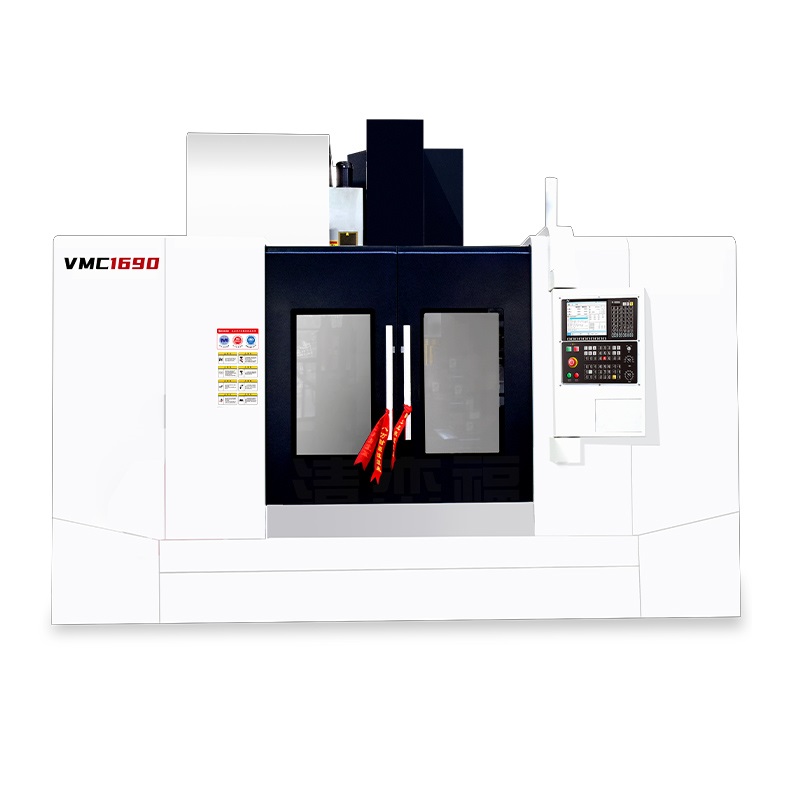
1690 at a glance
| Table size | 1600 × 800 mm |
| Max. worktable load | 1500 kg |
| X-axis travel | 1600 mm |
| Y-axis travel | 900 mm |
| Z-axis travel | 700 mm |
| Spindle taper | BT50-190 |
| Spindle speed | 6000 rpm |
| Rapid traverse (X/Y/Z) | 20 / 20 / 14 m/min |
| Machine size | 4500 × 3600 × 2800 mm |
| Machine weight | 12,000 kg |
The BT50-190 spindle is the point of this machine
The 1690 uses a short-nose BT50 spindle with a 190 mm outer diameter. That is the same interface family you find on horizontal machining centers and boring mills, not the 150 mm BT40 nose that carries most vertical machines. The larger taper means a stiffer connection between spindle and holder, which matters most when you are taking deep cuts in steel or cast iron. A BT40 toolholder will deflect and chatter long before a BT50 one does, and chatter is what kills surface finish and carbide inserts.
BONANZA pairs that spindle with a 72-tooth wide-belt drive and a 15 kW low-speed, high-torque motor rated at 1000 rpm. The belt drive keeps torque available down at the speeds where heavy cutting actually happens. The result is roughly 50% more machining torque than a comparable direct-drive setup. In practice that means you can run bigger depth of cut in a single pass instead of sneaking up on the size in three, and the cycle time difference on a large part is not a few percent, it is a few hours over a shift.
Top speed is 6000 rpm. If your work is all small aluminum details, a 12,000 rpm machine is a better fit and you should buy that instead. The 1690 is aimed at the other end of the scale: molds, machine bases, gearbox housings, weldments, and plates where the spindle spends most of its time between 500 and 3000 rpm.
What a 1.64 m long-span base actually does
The bed uses a 1.64 m long-span chassis with widened columns. That is not styling. On a machine with 1600 mm of X travel, the column carries the head and the Z-axis load out over the table, and the farther the head travels, the more leverage the cutting forces get on the column. A wide column with a long mounting span resists that leverage. The payoff is consistent geometry whether you are cutting at the left edge of the table or the right edge, and that consistency is what lets you hold tolerances across a whole batch of identical parts.
The other effect is vibration. A 12,000 kg machine with a rigid, well-braced bed simply does not shake the way a lighter machine does. If you have ever watched a small VMC shiver through a heavy cut and seen the finish come out wavy, you know exactly what this is about. Mass and rigidity are the cure, and the 1690 spends its 12 tonnes where it counts.
1600 mm of X travel and a 1500 kg table cover a lot of work
The 1600 × 800 mm table and 1600/900/700 mm travels put the 1690 firmly in the large-VMC class. It handles plates, frames, and housings that would hang off the edge of a 1000 mm machine, and it does it with a 1500 kg load limit, so a heavy fixture plus a heavy part is not a problem. Rapid traverse of 20 m/min on X and Y keeps positioning time from eating the gains of the faster cutting, which matters on long table moves between operations.
Typical workpieces: mold plates with large cavities, valve bodies, pump housings, gearbox casings, hydraulic manifold blocks, and structural parts for construction or agricultural equipment. If the part is mostly flat, mostly heavy, and needs serious metal removal, this is the class of machine it belongs on.
Who should buy the 1690
This machine makes sense if any of these sound like your shop:
- You machine plates or housings over 1000 mm long and currently compromise on depth of cut to protect a smaller machine
- You want one VMC that can rough cast iron or steel and still finish to tolerance without a second setup
- Your fixtures and parts together weigh more than 800 kg and keep hitting the load limit on your current table
- You are tired of chatter marks on deep pockets and want a spindle that does not flex out of the cut
If your parts are small, light, and detailed, a BT40 machine like the 855 or 1160 will do the same work for less money, and nobody here will argue with that. The 1690 earns its price when the work is big enough that a BT40 spindle is the bottleneck.
Where it sits in the BONANZA range
The 1690 is one of the heavy hitters in the BONANZA vertical machining center lineup. For jobs that stay under 1200 mm of X travel, the 1160 and 1265 cover the mainstream with 24 m/min rapids and smaller footprints. If you need even more table area, the L1690 shares the same 1600 × 800 mm table and BT50 spindle family with slightly different travel and rapid configuration, and the 1890 pushes further for large-stroke work. Match the table and spindle to your actual part envelope, and the choice gets simple.
Bottom line
The 1690 is a straight answer to a common problem: parts got bigger, and the machine did not. With a short-nose BT50-190 spindle, 15 kW high-torque belt drive, roughly 50% more torque in the low range, and a 1.64 m long-span bed under a 12-tonne frame, it is built to rough heavy material hard and still hold tolerance on the finish pass. It is not the fastest machine in the range and it is not pretending to be. It is the one that stops the compromise.
Want to check your part mix against the 1690? The full specification is on the 1690 Vertical Machining Center product page, or send BONANZA your drawings and get a straight recommendation on whether it fits.