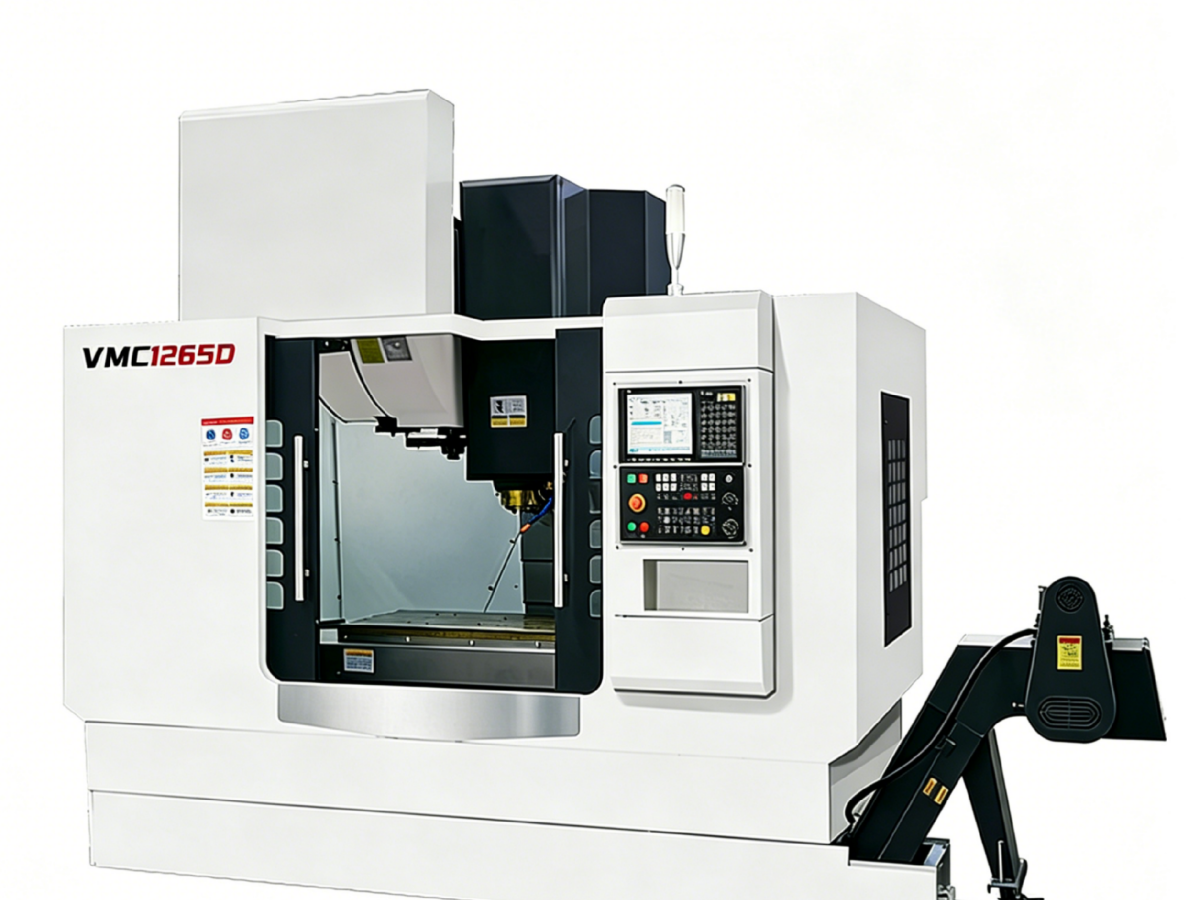
1265D Vertical Machining Center: 1,200 × 600 mm Table, 800 kg Load and 24 m/min Rapids
Shops tend to land in the 1,200 mm table class for one reason: they have outgrown an 800 mm machine but cannot justify the floor space or the price of a 1,400 mm one. The 1265D Vertical Machining Center sits in that gap, with a 1,200 × 600 mm table rated 800 kg, 1,200/650/650 mm travels, and X and Y rapids of 24 m/min.
Two numbers on that sheet shape the machine more than the rest, and neither of them is the one buyers ask about first. What follows is what the published figures actually buy you, how the 1265D compares with its neighbours in the BONANZA vertical range, and the items the product page leaves out that should be confirmed in writing before an order goes in.
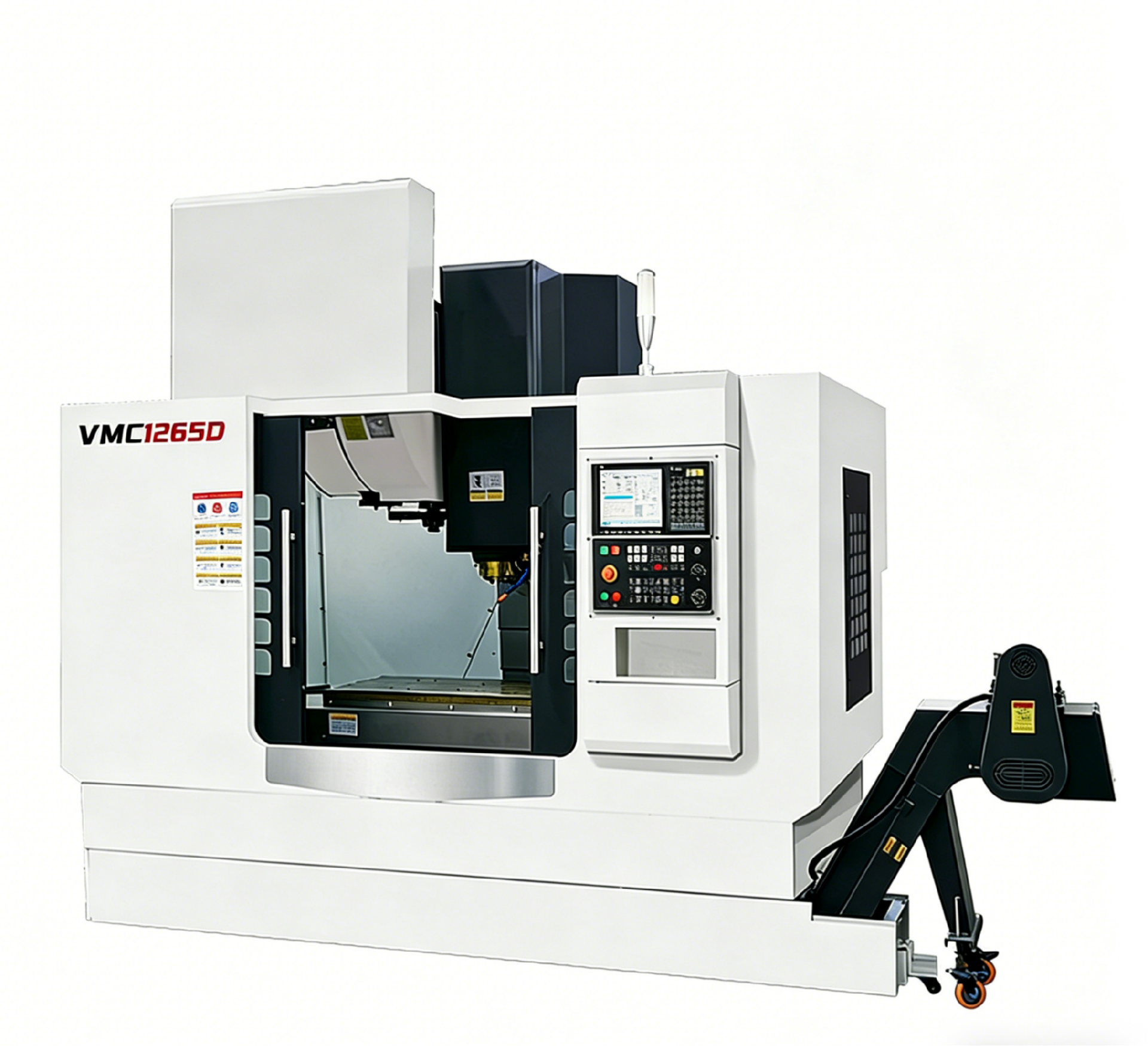
1265D specifications
| Item | Specification |
|---|---|
| Table size | 1,200 × 600 mm |
| Max. worktable load | 800 kg |
| T-slot (number × width × distance) | 5-18-100 mm |
| X-axis travel | 1,200 mm |
| Y-axis travel | 650 mm |
| Z-axis travel | 650 mm |
| X-axis rapid traverse | 24 m/min |
| Y-axis rapid traverse | 24 m/min |
| Z-axis rapid traverse | 18 m/min |
| Spindle taper | BT40Φ150 |
| Machine dimensions | 3,300 L × 2,600 W × 3,360 H mm |
| Machine weight | 6,800 kg |
Read the travel figures with the table, not against it
1,200 mm of X travel on a 1,200 mm table looks like it buys nothing. It does, and the reason is mechanical. On a vertical machining center the table moves under a fixed column, so the question is not how X travel compares with table length, it is how far the table can be indexed before the work runs out from under the spindle.
With X at 1,200 mm and a 1,200 mm table, either end of the table can be brought to the spindle. That is what makes a machine in this class a two-station setup: load one end while the other is cutting, or mount two different operations on one plate.
Y at 650 mm on a 600 mm wide table leaves 25 mm of table beyond the tool centreline at each end. Enough to reach the outer edge of a wide plate, or to clamp along the full width without the cutter stopping short of the last hole.
Z at 650 mm sets how tall a fixture you can hang off the table and how long a tool you can run before the head runs out of travel. The machine stands 3,360 mm tall, and most of that is column. If your ceiling is low, measure it: neither 3,360 mm nor the 3,300 × 2,600 mm footprint is small.
Z rapid is 18 m/min against 24 m/min on X and Y, because Z carries the head against gravity.
The 800 kg rating is the number to plan around
800 kg on a 1,200 × 600 mm table is real headroom. One step down in this range, the 855D is rated 600 kg on a 1,000 × 550 mm table.
The rating covers everything you bolt down, so the vise, tombstone, fixture plate and part all count against it. A 400 kg tombstone eats half of it before a part is loaded. And the rating is about the table and its ways, not about what the spindle can cut.
The T-slot pattern is 5-18-100 mm, five 18 mm slots at 100 mm centres. That takes standard M16 clamp studs, the common size for work in this class.
The BT40Φ150 spindle, and the gaps around it
The published taper is BT40Φ150: a BT40 taper on a spindle nose 150 mm in diameter. BT40 is the most widely available taper there is, so tooling cost and delivery for the 1265D are about as low as they get.
What the page does not publish is spindle speed, motor power, or torque. For a machine in this class that is the biggest omission on the sheet, because those three figures decide whether the 1265D can rough steel or is really a finishing and aluminium machine. Elsewhere in the range the pattern is a belt-driven 8,000 rpm spindle. The 855D and the 1370D are both listed at 8,000 rpm with BT40-150 noses. That is a pattern across the range, not a specification for this machine, so ask for it in writing rather than assuming it carries over.
Where the 1265D sits in the vertical range
The closest comparison is the model without the suffix. The 1265 carries a published specification that is word for word identical to the 1265D: same table, same 800 kg, same 1,200/650/650 mm travels, same 24 m/min X and Y rapids, same 3,300 × 2,600 × 3,360 mm dimensions, same 6,800 kg. The L1265 repeats it again.
A suffix normally marks a real difference, whether guideway type, spindle drive, or a factory option package. If these three are genuinely identical, one of them does not need to exist on the site. If they are not, the difference belongs on the page. Either way, get it in writing before you decide.
One step up in capacity, the 1370D runs a 1,400 × 700 mm table and 1,300/700/750 mm travels at 9,000 kg, and it is listed at 2,620 mm tall against the 1265D’s 3,360 mm. The bigger machine is longer and wider but shorter.
For long, narrow parts rather than wide plates, the 1560 takes a different shape: a 2,200 × 600 mm table rated 1,500 kg with 1,500/650/650 mm travels.
The full range is on the vertical machining centers series page.
What the page does not list
The published sheet covers the table, travels, rapids, taper, dimensions and weight, then stops. These are the items I would want confirmed in writing before ordering, roughly in order of how much they change what the machine can do:
- Spindle speed, motor power and torque, and whether the rating is continuous or a 15-minute duty figure.
- Tool magazine capacity and type, plus maximum tool diameter and tool length.
- Positioning and repeat positioning accuracy, and the inspection standard they are quoted against.
- Guideway type on each axis, linear roller guide or hardened box way, and the ballscrew grade.
- Controller make and model, and what the standard package includes.
- The actual difference between the 1265, the 1265D and the L1265.
- Standard versus optional workholding, chip conveyor, through-spindle coolant, and any automation.
Parts that fit the 1265D
The work this machine is built for sits in the middle of the weight range: automotive housings and brackets, pump and motor bodies, gearbox covers, mold plates, hydraulic manifold blocks, and general engineering plates. It also suits shops that want two operations on one table to cut setup time, with a vise job on one end and a fixture plate on the other. It is not the machine for parts that will regularly exceed 800 kg with a fixture, or for work that needs a 50 taper and heavy roughing.
Send the drawing with the material, part weight including the fixture, finished envelope, and the operations you expect to run. That is usually enough to say whether the 1265D fits the job or a 1370D is the better buy. Reach the team through the contact page.