Three spindle interfaces, one size class
Most five-axis enquiries we receive list the table size, the travels and the control. The tooling question arrives a week later, usually by email, usually phrased as “which holders do we need to buy?” The answer is already printed on the datasheet. It is three letters: BT40D on the LH400, BBT40 on the LH500 and the U series, HSK-T63 on the TMC630 and TMC800.
All three hold a tool of roughly the same shank size. How they hold it, and how fast they will spin it, is where the differences start.
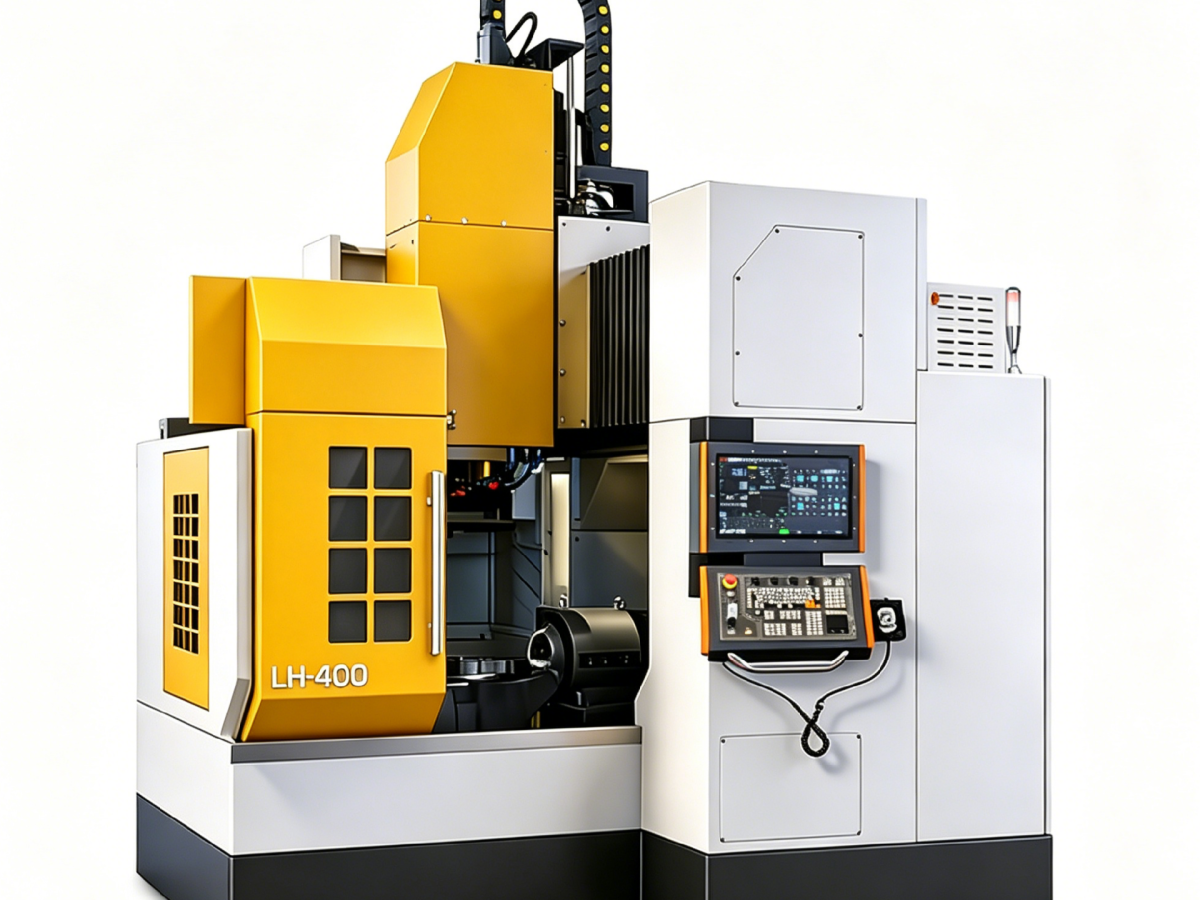
The published figures, side by side
This is what the product pages state today. Nothing here is rounded up or estimated; where a figure is not published, the cell is empty on purpose.
| Model | Spindle interface | Max speed | Spindle power | Table | Table load |
|---|---|---|---|---|---|
| LH400 | BT40D | 12,000 rpm | — | Φ400 mm | 200 kg |
| LH500 | BBT40 | 12,000 rpm | — | Φ500 mm | 350 kg |
| U260 | BBT40 | 12,000 rpm | 11 kW | Φ260 mm dual direct drive | 80 kg |
| U320 | BBT40 | 12,000 rpm | — | Φ320 mm dual direct drive | 150 kg |
| U400 | BBT40 | 12,000 rpm | 11 kW | Φ400 mm dual direct drive | 200 kg |
| TMC630 | HSK-T63 | 15,000 rpm | — | Φ650 mm, ±110° A axis | 500 kg |
| TMC800 | HSK-T63 | 15,000 rpm | — | ±110° A axis, C 360° | — |
BT40D: the LH400 choice
BT40D is a 40-taper shank with a DIN-style flange and a drive key arrangement that the ATC grips from the flange. On the LH400 it tops out at 12,000 rpm. That ceiling is not a marketing number — it is where a 40-taper tool holder starts to lose grip force against centrifugal growth of the retention balls. Above roughly that speed, a standard 40-taper pull stud begins to unload and the holder creeps in the spindle nose.
For the work the LH400 is built for, that ceiling costs nothing. A Φ400 mm table with a 200 kg load rating is carrying parts that need 8,000 to 10,000 rpm at most, usually less, with a 16 mm or 20 mm carbide end mill in a sidelock holder. The X/Y/Z envelope is 600/1000/600 mm, and that 1,000 mm of Y is the number that sells this machine — it lets a long shaft sit across the table and still reach both ends without re-fixturing.
BT40D holders are also the cheapest thing in the toolroom. If a shop already runs 40-taper verticals, the LH400 inherits the whole rack.
BBT40: dual contact on the LH500 and the U series
BBT40 adds a second contact face. The holder seats on the taper and on the spindle nose at the same time, which roughly doubles the axial stiffness of the joint and moves the chatter threshold up. On the LH500 the speed limit is unchanged at 12,000 rpm, so you are not buying rpm. You are buying rigidity at the same rpm.
That matters most on the U series, because those machines mill as well as turn. The U260 runs a dual direct-drive table of Φ260 mm with a Φ50 mm centre hole and an 80 kg load rating, on travels of 850/600/600 mm and a 380×300 mm machining range. An 11 kW direct-drive spindle turns to 12,000 rpm. When a small table and a light part meet an interrupted cut, the joint between spindle and holder is the first thing that deflects. Dual contact is worth the extra cost per holder here.
The U400 follows the same pattern with a bigger envelope: 1300/700/750 mm of travel, a 610×500 mm machining range, a Φ400 mm table with an Φ80H7 centre hole and a Φ60 mm through hole, 200 kg of load, and the same 11 kW at 12,000 rpm. From a tooling point of view, the U260, U320 and U400 are one family: buy BBT40 once and it covers all three.
HSK-T63: where 15,000 rpm comes from
HSK is a hollow taper. The holder is clamped from inside the shank, so the faster it spins, the tighter the taper seats. There is no pull stud to unload, and the flange face is a real face contact by design. That is why the TMC machines can publish 15,000 rpm while the 40-taper machines stop at 12,000.
HSK-T63 specifically is the turning-friendly variant: the drive slots are toleranced tighter than HSK-A so the holder can be driven in rotation as well as milling. On a trunnion machine that turns and mills, that detail matters when a C axis indexes under load.
The TMC630 pairs the T63 spindle with a Φ650 mm C table rated 500 kg and turning to 400 rpm, an A axis that swings ±110° at up to 100 rpm, and travels of 700/350+590/550 mm. The TMC800 keeps both the taper and the 15,000 rpm but opens the envelope to 850/1040/600 mm at 11 tonnes. Same tooling, more part.
Where the taper stops being the decision
Two things override interface choice, and both are physical.
The first is part size. A 500 kg part on a TMC630 table cannot be reached by a small-diameter tool at 15,000 rpm without a long gauge length, and gauge length eats the rigidity that HSK was bought to provide. Past about 4:1 diameter-to-length, the holder interface is no longer the weak link — the tool is.
The second is the fixture. Published table load is a machine limit, not a workholding plan. An 80 kg rating on the U260 includes the chuck or the fixture plate, and a four-jaw or a sub-plate can take half of that before the part is even loaded.
What you actually have to buy
If the shop already runs 40-taper machines, the LH400 costs nothing in tooling and the LH500 costs the difference between BT40D and BBT40 holders on the tools that matter. Moving to a TMC machine is a clean break: HSK-T63 holders, HSK-T63 collets and a balancing grade that suits 15,000 rpm. Budget for it as part of the machine, not after it.
If you want the full picture of how these seven models compare on table design and load, the LH, U and TMC series comparison covers it figure by figure. The 5-axis turning and milling range lists every model with its current datasheet.
Questions we get on this
Can I run BT40D holders in a BBT40 spindle?
Yes. A standard BT40 holder will seat in a BBT40 spindle and run. You lose the face contact, so you get BT40 performance, not BBT40 performance. The reverse is not true.
Is 12,000 rpm enough for aluminium on the U series?
For a Φ260 to Φ400 table with a small part, 12,000 rpm is workable with a 12 mm to 16 mm cutter. If your cycle is dominated by light alloy finishing with small tools, the TMC630 at 15,000 rpm is the machine to look at.
Do the LH400 and LH500 share tooling?
Almost. Both are 12,000 rpm 40-taper machines with the same 600/1000/600 mm envelope and the same 9,000 kg frame, so holders interchange. The LH500 table is Φ500 mm at 350 kg instead of Φ400 mm at 200 kg, and the taper is BBT40 instead of BT40D.