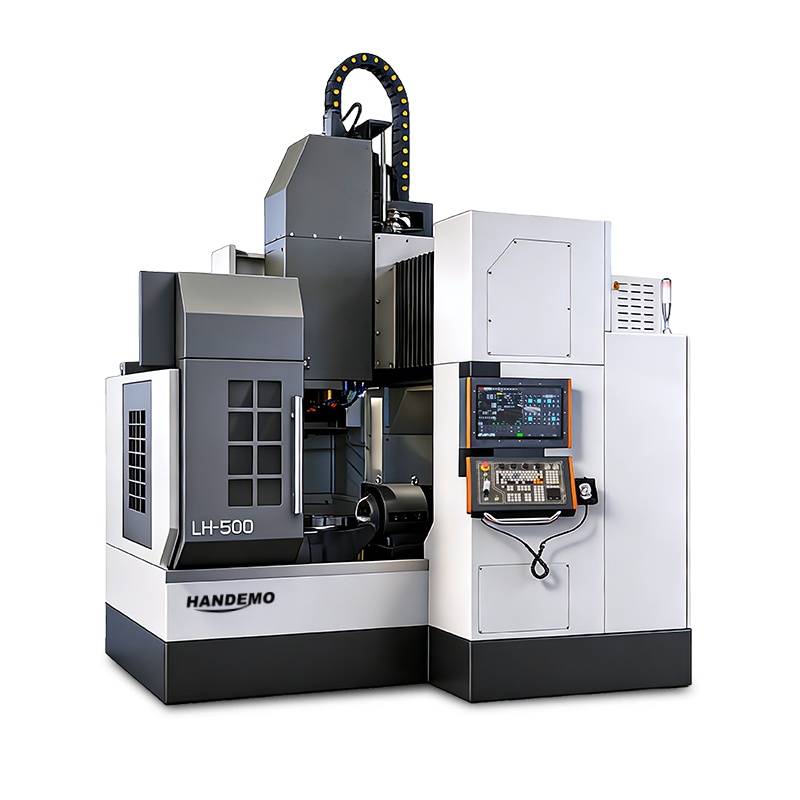
LH500 5-Axis Turning and Milling Machine: A Φ500 mm Table That Carries 350 kg
The LH500 is the largest-table machine in BONANZA’s LH range of 5-axis turning and milling machines. The headline numbers are simple: a Φ500 mm rotary table rated for 350 kg, X/Y/Z travels of 600/1000/600 mm, and a BBT40 spindle turning up to 12,000 rpm. If you are milling and turning medium-size flanges, housings or mold inserts and want both operations in one setup, those four figures are the ones to look at first.
The LH500 specification sheet, read line by line
Everything in the table below comes from the machine’s own specification sheet. Nothing here is estimated.
| LH500 Specification | Value |
|---|---|
| Table size | Φ500 mm |
| Max. worktable load | 350 kg |
| Spindle taper hole | BBT40 |
| Spindle speed | 12,000 rpm |
| X-axis travel | 600 mm |
| Y-axis travel | 1000 mm |
| Z-axis travel | 600 mm |
| X-axis rapid shift | 15 m/min |
| Y-axis rapid shift | 12 m/min |
| Z-axis rapid shift | 15 m/min |
| Machine size (L×W×H) | 3495 × 2829 × 4150 mm |
| Machine weight | 9,000 kg |
Two things stand out. First, the Y axis is the long one at 1000 mm while X and Z are 600 mm each. On this machine the operator gets a full metre of stroke along Y, which is more than most people expect when they read “600 mm X travel” and stop there. Second, the table size and load (Φ500 mm and 350 kg) are the reason the machine exists as a separate model from the smaller LH400.
Why the Y axis has 1000 mm of travel
Rapid rates hint at how the machine is laid out. X and Z both rapid at 15 m/min; Y is slower at 12 m/min. Slower Y usually means more mass is moving vertically or along a heavier casting, and that is consistent with the way the strokes are distributed. Whatever the internal layout, the practical result is the same: the working envelope you get is 600 × 1000 × 600 mm, not a cube.
That shape matters for tool reach. Parts that are long in the Y direction, such as housings, elongated brackets or parts fixtured two-up along the table axis, fit without hanging outside the envelope. Axis naming and stroke direction are worth confirming against the general-arrangement drawing before you fixture something expensive, because machine builders do not all label axes the same way on tilting-table designs.
A 350 kg table load and a Φ500 mm face
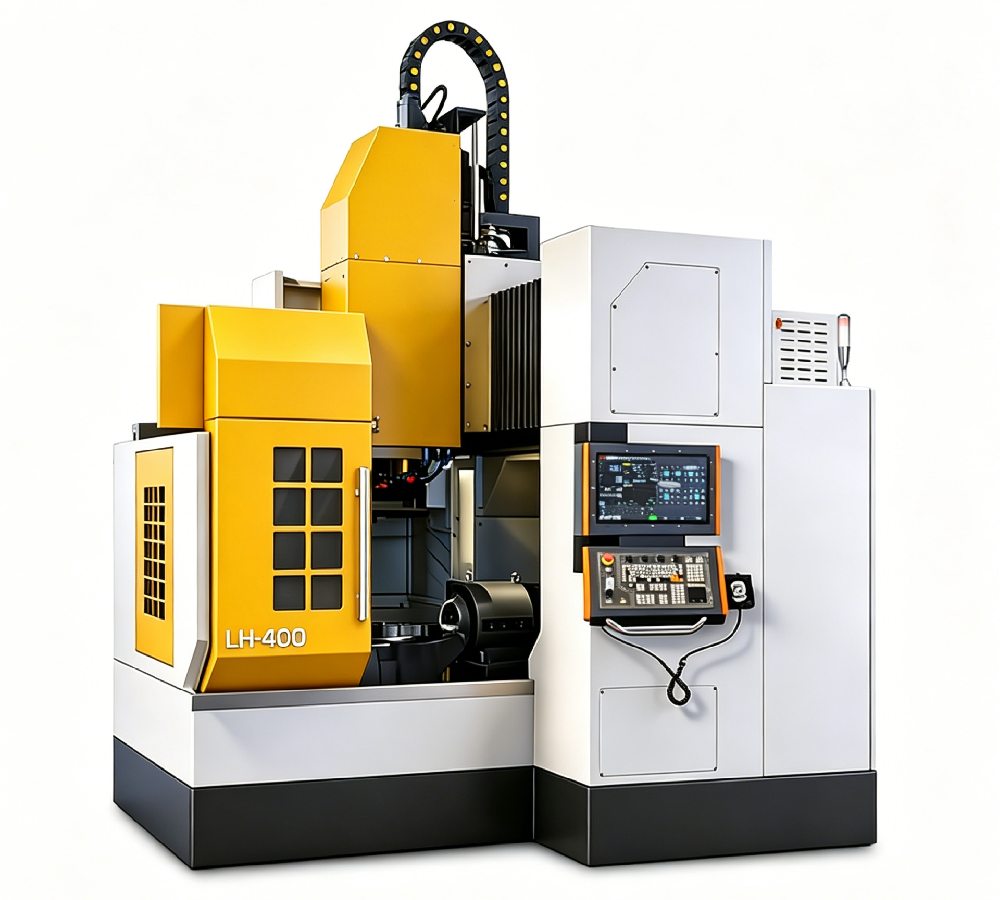
Table load is where the LH family splits. The LH400 carries 200 kg on a Φ400 mm table. The LH500 carries 350 kg on Φ500 mm: 75 percent more load capacity and a face 25 percent wider. In practice that is the difference between a fixture that holds one part and a fixture that holds a small tombstone or two parts at once.
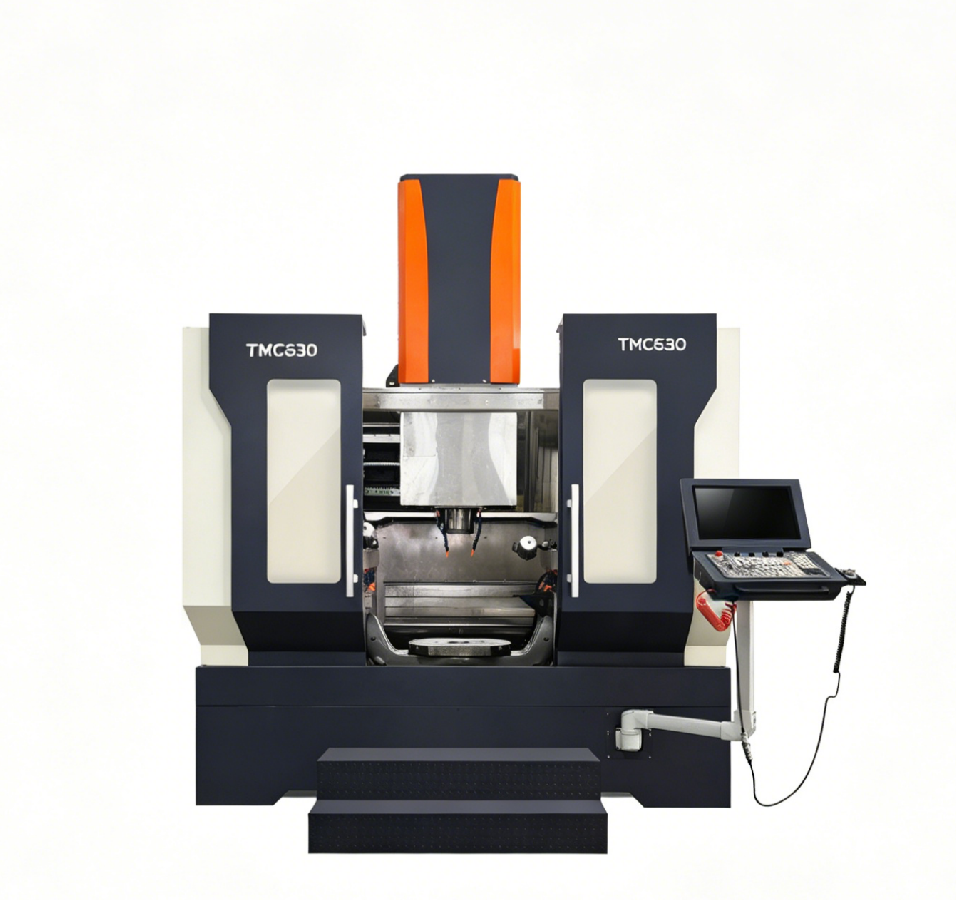
For context inside our own 5-axis range, the direct-drive U-series tables top out at 200 kg on the U400 (Φ400 mm flange), and the trunnion-style TMC630 lists a 650 mm C-axis table with 500 kg allowable load. The LH500 sits in the gap between them: more table capacity than the U-series, a smaller and more compact package than the TMC trunnion machines.
BBT40 at 12,000 rpm
The spindle taper is listed as BBT40 with a 12,000 rpm top speed. BBT40 is the dual-contact version of the BT40 taper: the tool holder seats on both the taper and the flange face, which stiffens the connection at the spindle nose. At 12,000 rpm that extra contact area is the difference between a holder that runs quietly and one that starts to chatter when you take a real depth of cut in steel.
One detail worth flagging: the LH400 sheets the same 12,000 rpm spindle but calls its taper BT40D, while the LH500 says BBT40. If the holder interface matters to your tooling standard, ask for the spindle drawing rather than assuming the two are identical.
How the LH500 compares across the 5-axis line
Same series, different envelopes. This is the honest comparison from the published specification sheets.
| Model | Table / Load | X / Y / Z Travel | Spindle |
|---|---|---|---|
| LH500 | Φ500 mm / 350 kg | 600 / 1000 / 600 mm | BBT40, 12,000 rpm |
| LH400 | Φ400 mm / 200 kg | 600 / 1000 / 600 mm | BT40D, 12,000 rpm |
| U320 | Φ320 mm flange / 150 kg | 1100 / 650 / 650 mm | Direct-drive, 12,000 rpm |
| U400 | Φ400 mm flange / 200 kg | 1300 / 700 / 750 mm | Direct-drive, 12,000 rpm, 11 kW |
| TMC630 | Φ650 mm / 500 kg | 700 / 350+590 / 550 mm | HSKT63, 15,000 rpm |
| TMC800 | Trunnion, A ±110° / C 360° | 850 / 1040 / 600 mm | HSK-T63, 15,000 rpm |
The pattern is clear enough. If your part is light and needs fast A/C interpolation on a small face, the U-series direct-drive tables are the better fit. If the part is heavy and needs a large C-axis face plus a faster spindle, the TMC machines with HSK-T63 at 15,000 rpm come into play. The LH500 is the middle option: a big load on a 500 mm table, with a 40-taper spindle at 12,000 rpm.
What fits on an LH500
At 350 kg and Φ500 mm, the natural work is medium flange-type and box-type parts: hydraulic manifolds, gearbox covers, pump housings, valve bodies, small impellers and light mold inserts. The ones that benefit most are the parts you would otherwise run across two or three machines: a turned bore here, a pattern of milled pockets there, a set of angled holes that need the part tipped over.
The 9,000 kg machine weight and the 3495 × 2829 × 4150 mm footprint are worth thinking about early. That is a machine that wants a proper foundation and enough overhead clearance for rigging. Note that the LH400 sheet lists the same machine size and the same 9,000 kg weight as the LH500, which suggests the two share a common base casting. Confirm the shipping dimensions and the lifting points with us before you pour concrete.
Questions we get about the LH500
What is the real difference between the LH500 and the LH400?
Table size and load capacity. The LH400 takes a Φ400 mm table at 200 kg; the LH500 takes Φ500 mm at 350 kg. The travels, machine size and machine weight are listed identically for both. Pick the LH500 when the part or the fixture gets past 200 kg, or when the part face needs the extra 100 mm of table diameter.
Does the LH500 turn and mill in one setup?
It is sold as a 5-axis turning and milling machine, so that is the intent. But the published sheet gives table capacity, travels, spindle taper and speed. It does not list C-axis torque, table speed or turning diameter limits. Those numbers come from the full technical proposal, so ask for it before you commit a part to the process.
What spindle power and control does it use?
Those figures are not published on the product page. Spindle power, controller model, accuracy and repeatability are all confirmed at quotation stage, and we would rather send you the accurate sheet than quote a number we have not verified.
Can I see one cutting?
Yes. We can arrange shop-floor video and, where scheduling allows, a live test cut on your part geometry or a sample we hold in stock.
Get the LH500 technical proposal
If the Φ500 mm table and 350 kg load line up with your part, send us the drawing and we will come back with the full specification, workholding options and a factory-direct price. We build these in Shandong, so there is no trading-company margin in the number.
Request an LH500 quote or browse the full 5-axis turning and milling machine series to see how the LH500 compares with the U, TMC and LH400 models side by side.