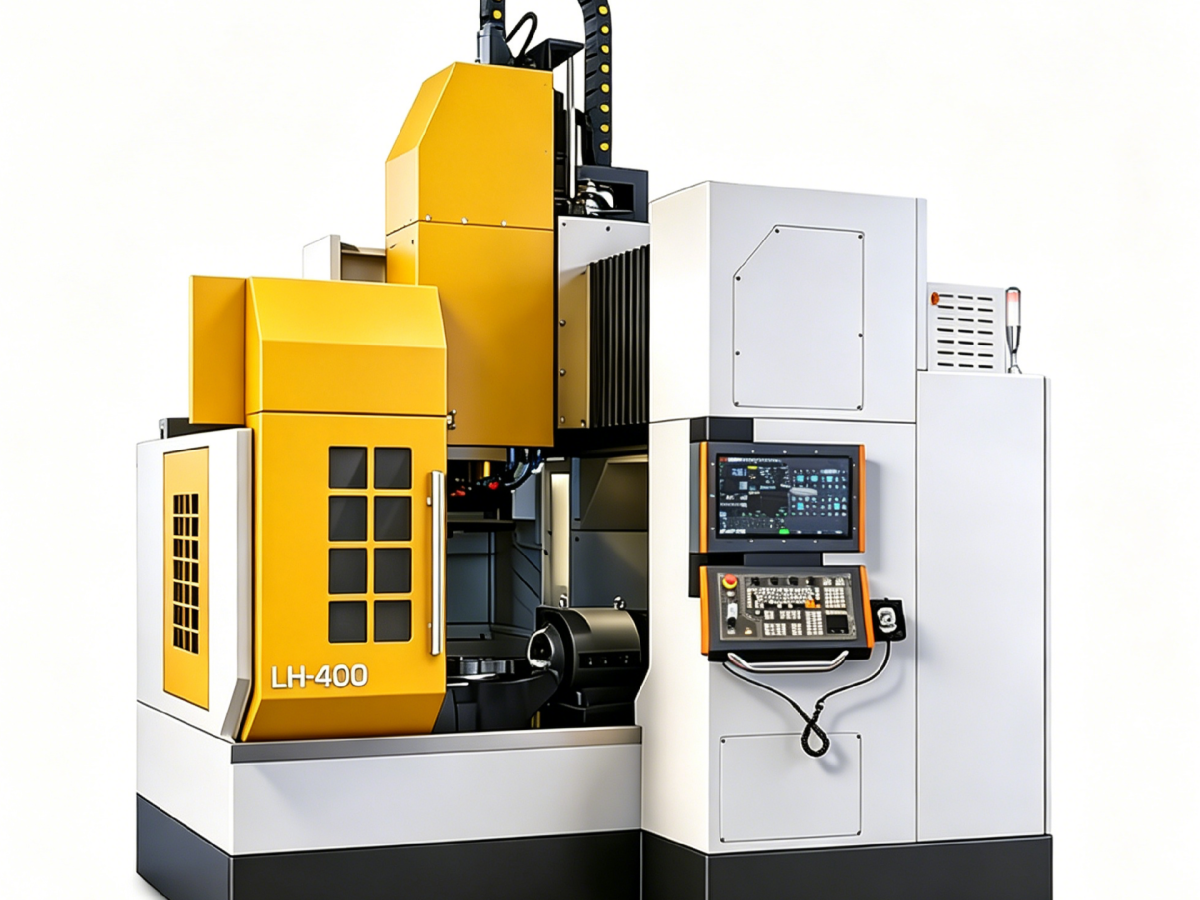
LH400 5-Axis Turning and Milling Machine: 400 mm Table and 1,000 mm of Y Travel
Five-axis machines in the 400 mm table class usually get bought for one reason: the part needs angled features and nobody wants to move it three times. The LH400 5-Axis Turning and Milling Machine fits that brief, but the number that caught my eye on the datasheet is not the table at all. It is the 1,000 mm of Y travel sitting on top of a 400 mm table.
The published sheet for the LH400 is short, so there is no padding here. What follows is what the listed numbers mean in practice, how the LH400 compares with the rest of the range, and the points worth confirming in writing before you order.
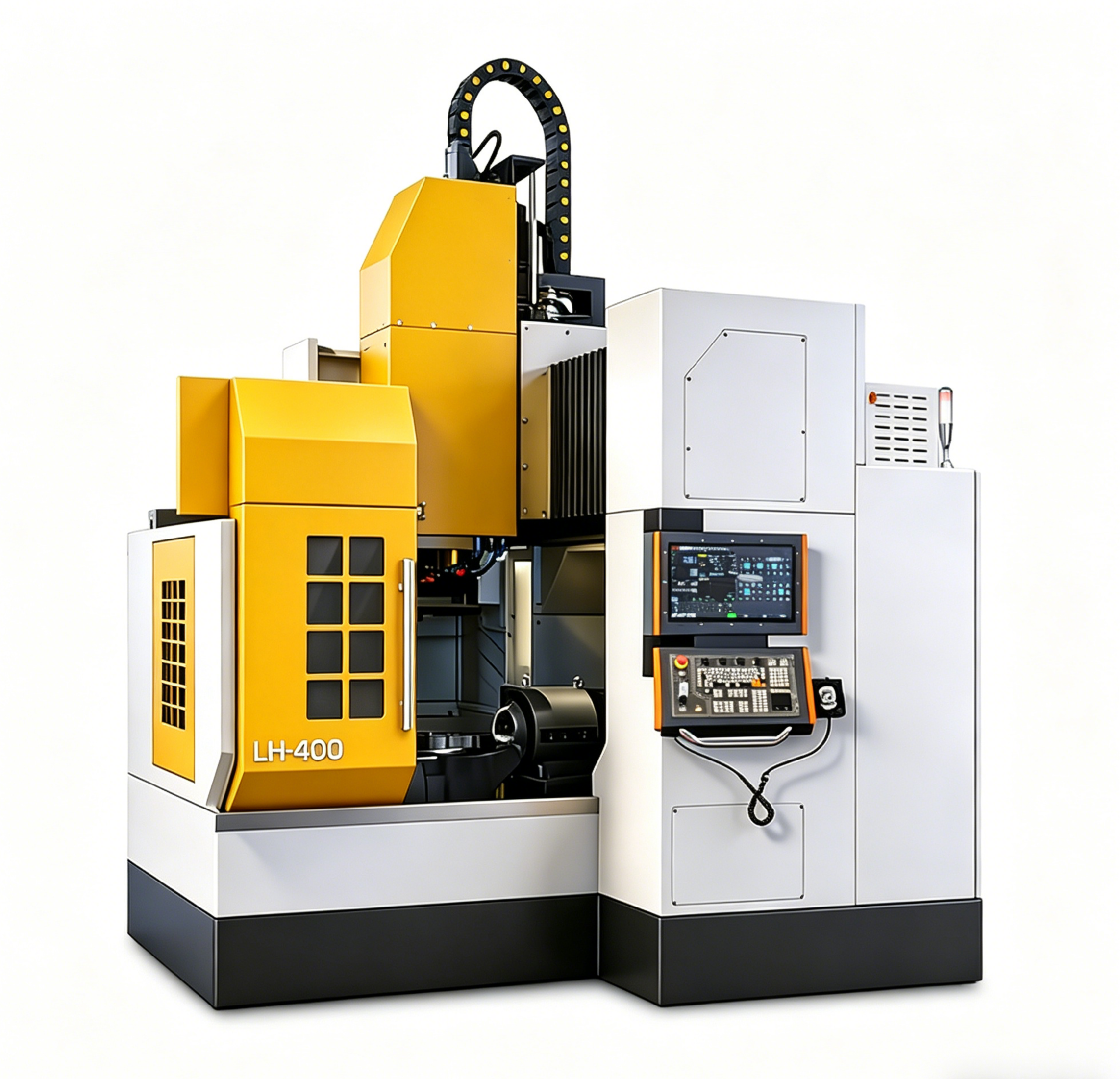
LH400 specifications
| Item | Specification |
|---|---|
| Table size | Φ400 mm |
| Max. worktable load | 200 kg |
| X-axis travel | 600 mm |
| Y-axis travel | 1,000 mm |
| Z-axis travel | 600 mm |
| X-axis rapid traverse | 15 m/min |
| Y-axis rapid traverse | 12 m/min |
| Z-axis rapid traverse | 15 m/min |
| Spindle taper | BT40D |
| Spindle speed | 12,000 rpm |
| Machine dimensions | 3,495 L × 2,829 W × 4,150 H mm |
| Machine weight | 9,000 kg |
What the travel figures tell you
X is 600 mm, Y is 1,000 mm, Z is 600 mm. That is an unusual shape. On a machine with a rotary table, X normally carries the longest stroke because it has to index the table past the spindle. Here Y is the long axis, and it is 1.67 times the X stroke.
What that buys you is reach across the work envelope. On a five-axis machine the tool often has to reach a face pointing somewhere inconvenient, and the axis that saves you is the one with stroke to spare. A 1,000 mm Y means the spindle can travel well past the centreline of a 400 mm table without running out of travel, which is what you want when a part is fixtured off-centre or when a long tool has to reach down the side of a housing.
X and Z rapid at 15 m/min, Y at 12 m/min. Y carries the ram and spindle mass over the longest distance, so a slightly lower rapid rate there is normal.
Z travel and machine height
Z at 600 mm on a machine standing 4,150 mm tall is a sensible pairing. Most of that height is column and headroom, which matters when you cut with a long tool or work on a tall fixture. If ceiling clearance is tight, measure before you order.
The table: 400 mm and 200 kg
A Φ400 mm table with a 200 kg load rating is a working size, not a token one. It takes small and medium housings, valve blocks and brackets comfortably. The honest part of that rating is the word “max” — 200 kg includes the fixture, not just the part. A substantial tombstone or a heavy three-jaw chuck eats into that budget fast, so on a job where the part itself is 150 kg you are already close to the line once you bolt it down.
The BT40D spindle at 12,000 rpm is the right pairing for that envelope. BT40D tooling is widely available, and 12,000 rpm covers aluminium, brass, and the usual steel work with small-to-medium cutters. It is not a high-speed spindle and it is not claiming to be.
Where the LH400 sits in the BONANZA five-axis range
The most useful comparison is one model up. The LH500 runs the same X/Y/Z travels of 600/1,000/600 mm, the same rapid rates, the same 3,495 × 2,829 × 4,150 mm footprint and the same 9,000 kg machine weight. The difference is the table and spindle: Φ500 mm with a 350 kg load and a BBT40 taper. Same floor space, more capacity. If your parts are trending heavier, that is worth knowing before you sign for the smaller machine.
Below the LH400 in table size, the U-series takes a different approach. The U400 also carries a Φ400 mm table and a 200 kg load, but the travels are 1,300/700/750 mm with a stated machining range of 610 × 500 mm, and the rotary table is dual direct drive with a direct-drive mechanical spindle rated 11 kW at 12,000 rpm. The U320 steps down to a Φ320 mm flange with a 150 kg load, and the U260 to Φ260 mm with 80 kg. So the choice between an LH and a U at the same table size comes down to axis layout and table drive, not raw capacity.
The TMC models are a different animal. The TMC630 has a Φ650 mm C-axis table rated 500 kg, an A axis tilting ±110°, a 15,000 rpm HSKT63 spindle and an 11 tonne machine. That is more spindle speed and more table capacity for a correspondingly bigger footprint and price. If your work is small parts with fine features, the LH400’s 12,000 rpm BT40D is the more sensible buy. If it is a large part needing a fast light finishing pass at an angle, the TMC is built for it.
The full lineup is on the 5-axis turning and milling machine series page.
What the LH400 datasheet does not cover
This is where I would slow down before ordering. The published sheet lists table, travels, rapids, taper, speed, size and weight, and stops there. The following items are not on it, and each one affects whether the machine suits your parts:
- Rotary axis configuration. Which rotary axes the machine has, their ranges, their maximum speeds, and whether the table drive is direct drive, worm gear, or a roller cam. This is the core of a five-axis machine.
- Spindle motor power and torque, and whether the rating is continuous or intermittent duty.
- Tool magazine capacity, type, and maximum tool diameter and length.
- Positioning and repeat positioning accuracy, and the inspection standard the figures are quoted against.
- Guideway type on each linear axis.
- Controller model and version.
- Standard versus optional configuration, including workholding and any automation such as a bar feeder or automatic door.
None of that is unusual for a product page. It does mean the LH400 sheet is a starting point rather than a quotation datasheet, and the rotary axes are the thing to pin down first.
Parts that fit the LH400
The job this machine is built for is one that needs a part machined on several faces without a second setup, where the part weighs under 200 kg with its fixture and measures inside a 400 mm table swing. Hydraulic manifold blocks, pump and motor housings, gearbox covers, small valve bodies, and angled brackets all sit in that range. It also suits shops that already run three-axis verticals and want to bring angled features in-house without buying a second machine and a second operator to run it.
If you have a part in mind, send the drawing with material, part weight, the finished envelope, and a note on which faces currently need a second operation. That is usually enough to say whether the LH400 covers it or whether the LH500 or a TMC is the better fit. You can reach the team through the contact page.