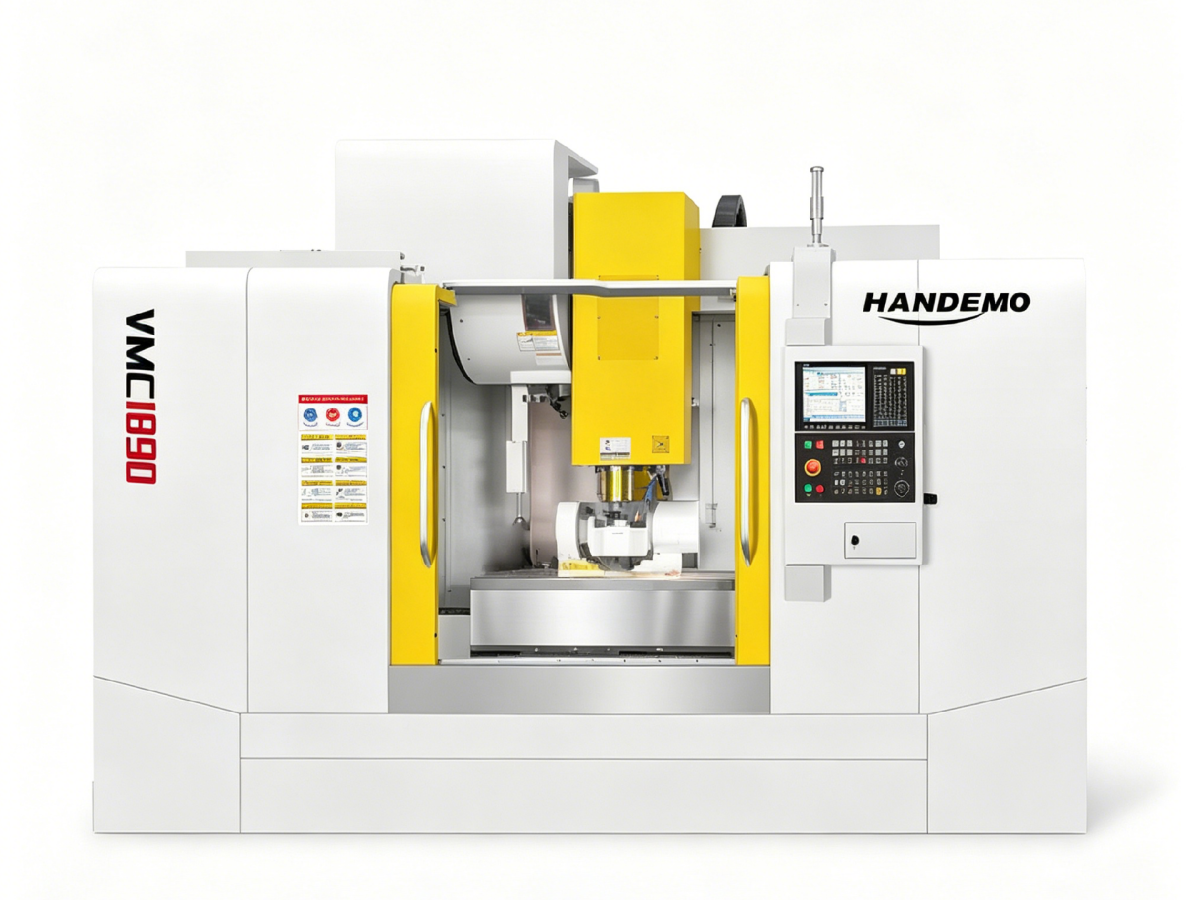
1890 Vertical Machining Center: 1,800 mm X Travel on a 14-Ton Frame
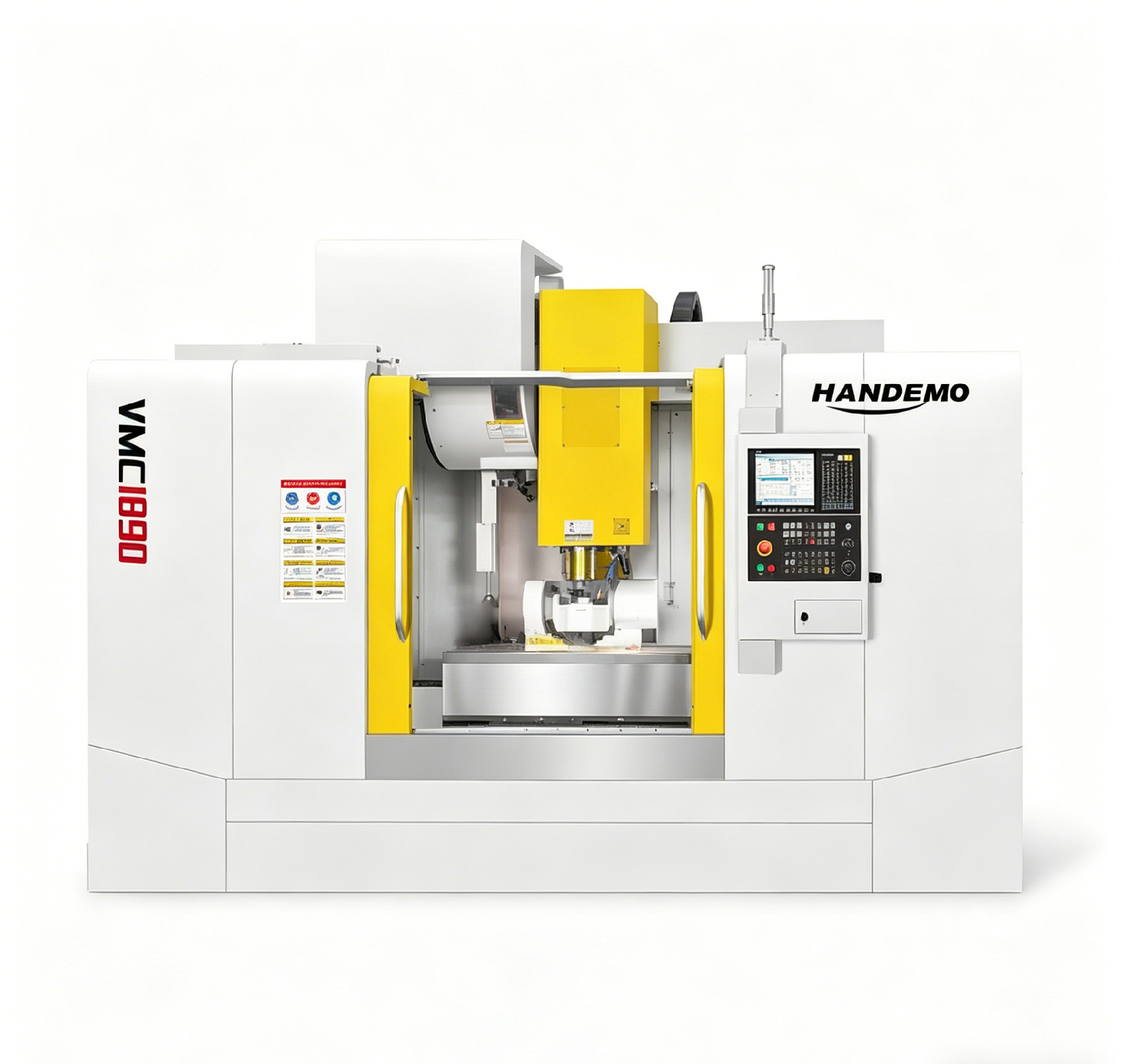
The 1890 is the largest vertical machining center in the BONANZA lineup that still fits through a standard shop door. Its table measures 2000 × 900 mm, it carries 1,600 kg of workpiece, and the whole machine weighs 14,000 kg. If you have been farming out long base plates, die shoes or weldment frames because your 850-size VMC runs out of X travel at 800 mm, this is the machine that brings that work back in-house.
What the 1890 Handles
X travel is 1,800 mm, Y is 900 mm, Z is 600 mm. That envelope covers most of what job shops call “oversize but not gantry-size”: hydraulic manifolds, injection mold bases, machine tool columns, long aluminum extrusion profiles, and fixture plates for other machines.
The frame layout is a long-span bed with widened columns, the same approach we use on the 1690 series. On a machine with 1.8 meters of X travel, rigidity at the far ends of the table is the whole ballgame. A short, narrow base lets the table hang out past its support and you feel it in the cut — chatter shows up first on the outer 300 mm of travel, and no amount of finishing passes hides it. The 1890 carries the table on a bed long enough to keep the saddle supported through the full stroke.
Specifications
| Parameter | Value |
|---|---|
| Model | VMC1890 |
| Table size | 2000 × 900 mm |
| Max. worktable load | 1,600 kg |
| X-axis travel | 1,800 mm |
| Y-axis travel | 900 mm |
| Z-axis travel | 600 mm |
| X/Y rapid traverse | 20 / 20 m/min |
| Z rapid traverse | 15 m/min |
| Spindle taper | BT50-190 |
| Spindle speed | 6,000 rpm |
| Machine dimensions | 5,000 × 3,000 × 2,900 mm |
| Machine weight | 14,000 kg |
Why the BT50-190 Spindle Decides the Job
The spindle nose is BT50 with a 190 mm outer diameter and a short projection. Two things follow from that, and both matter more than the number on the spec sheet suggests.
Tool rigidity
A BT50 holder is bigger and stiffer than BT40. On a face mill 125 mm across, running a 3 mm depth of cut in P20 mold steel, the difference between BT40 and BT50 is not subtle: the BT50 setup cuts clean while the smaller spindle starts singing. That stiffness also lets you hang longer tools out of the spindle. Deep pockets and rib walls stop being a finishing problem.
Torque at low rpm
The 1890 runs a geared spindle with a rated 15 kW motor and a 72-tooth drive, which lifts output torque roughly 50 percent over a direct-drive arrangement of the same rating. In practice that means you can take a heavier first pass in 4140 or ductile iron and skip a semi-finish operation. Fewer passes is not just faster; it is one less setup that can drift.
The 6,000 rpm trade-off
Peak speed is 6,000 rpm, not 12,000. Be clear about what that buys and costs. It buys bearing life and torque down low. It costs you aluminum at small cutter diameters — a 6 mm end mill at 6,000 rpm is running under 120 m/min surface speed, well below what aluminum wants. If your work is mostly aluminum with small tools, look at a high-speed 855 or L1265 instead. If your work is steel, cast iron and large-diameter cutters, 6,000 rpm with real torque is the more useful spindle.
Table Capacity and Workholding
The 1,600 kg load rating and 2000 × 900 mm surface let you fixture two or three parts at once. On long parts, plan your fixture so the load sits over the saddle rather than cantilevered off one end — table deflection is tiny but it is not zero, and a 400 mm overhang with a heavy vise on it will show up in a flatness check.
Skip the tombstone unless your parts justify it. On a machine this size it eats Y travel fast; a sub-plate with modular fixturing and two dedicated vises is more flexible and faster to change over.
Accuracy and Repeatability in a Working Shop
Positioning accuracy and repeatability on the 1890 are specified for precision work, and the design supports it: hand-scraped fits on the guide surfaces, pre-tensioned ballscrews, and a thermal compensation routine that runs from a cold start. But the specification is a laboratory number. What you actually get in production depends on three things you control.
First, the foundation. A 14-ton machine on an unreinforced slab will settle unevenly and your geometry will move within weeks. Pour a proper isolated pad, and let it cure. Second, temperature. Put the machine away from the loading door and out of direct sun. A 6 °C swing across the day is worth more error than most operators expect. Third, warm-up. Run a 20-minute spindle and axis warm-up cycle every morning before the first tight-tolerance part. Skip it and the first part of the day will be the one you scrap.
Where the 1890 Sits in the Range
Compare it against the L1690, which also runs a BT50-190 spindle but at 1,600/900/700 mm travel and 6,000 rpm on a 1,500 kg table. The L1690 gives up 200 mm of X and 100 kg of load capacity; the 1890 gives up the L1690’s extra 100 mm of Z. If your parts are long and flat, take the 1890. If they are tall and shorter, take the L1690.
Below that, the vertical machining center series continues with the 855D at 800/550/550 mm and the L1265 at 1,200/650/650 mm. Both are BT40 machines with 8,000 rpm spindles and 32/24 m/min rapids — faster in aluminum, lighter in steel. Plenty of shops run a 1890 for the heavy long work and a smaller VMC for the high-speed jobs, and that pairing covers more ground than one mid-size machine ever will.
Options Worth Specifying Up Front
Retrofitting is always more expensive than ordering it on the build. Three options earn their cost on this machine class: a chain-type chip conveyor with a coolant tank sized for continuous roughing, through-spindle coolant for deep-hole drilling and pocket floor finish, and a spindle oil cooler if you run long unattended cycles in summer heat. A fourth axis is available, but decide before you pour the foundation — the wiring and the control configuration are much easier to do at the factory.
Shipping and Installation
At 5,000 × 3,000 × 2,900 mm and 14,000 kg, the 1890 ships as a single unit in a seaworthy crate. You need a forklift rated well above 14 tons or a crane with a spreader bar. Confirm door height against 2,900 mm before the container is booked, and crane capacity before the truck arrives. Both conversations are cheaper a month early.
Get the Drawing Set
If the 1890 envelope fits your part family, the next step is the foundation drawing, the power and air requirements, and the option list for your specific work. Send us the part drawing and the material and we will tell you whether the 1890 is the right size or whether the horizontal machining center series suits your part geometry better. Full specifications are on the 1890 vertical machining center product page, and you can request a factory-direct quote any time.