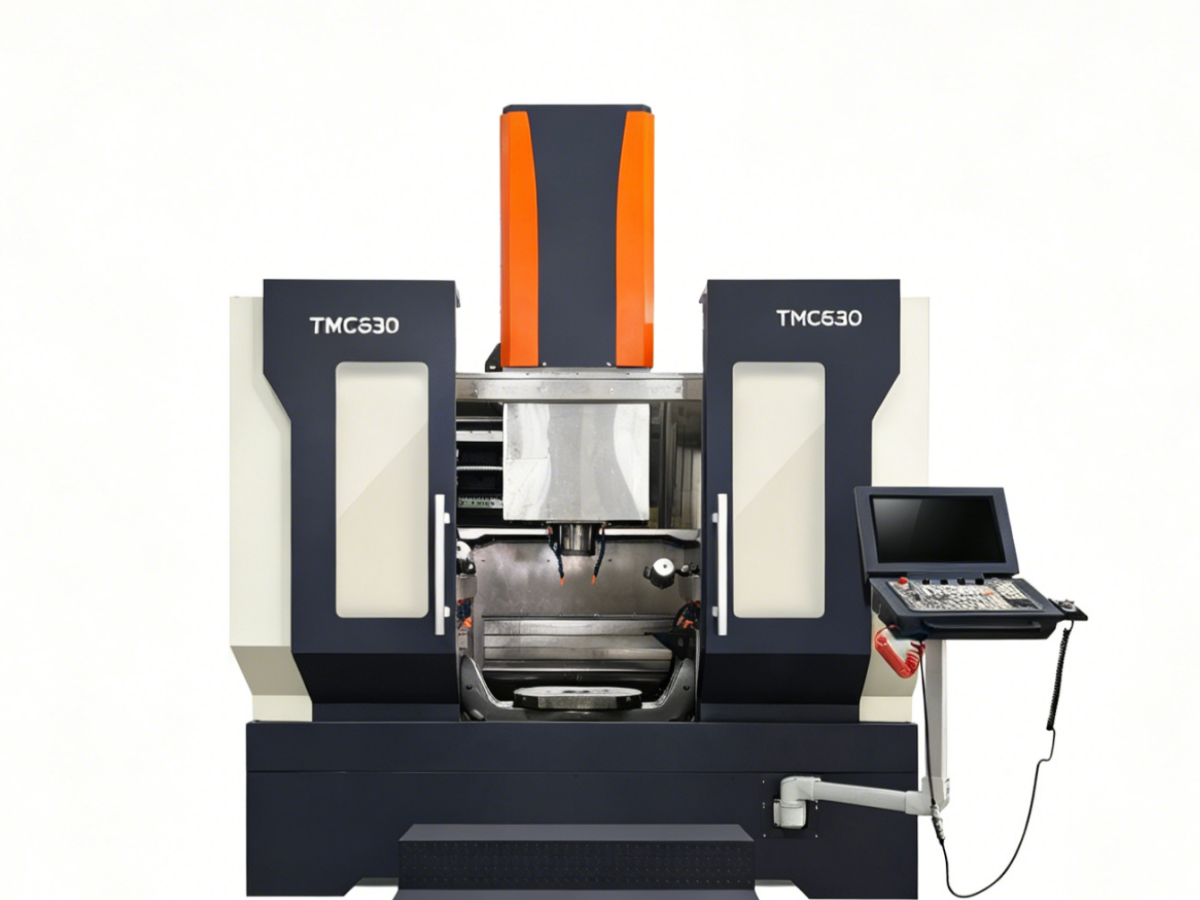
TMC630 5-Axis Turning and Milling Machine: 650 mm Table, ±110° Tilt and a 15,000 rpm HSK-T63 Spindle
Most shops that buy a five-axis machine already own a lathe and a VMC. That arrangement stops working the moment a part needs a turned diameter and a milled feature on the same datum: two setups, two fixture errors, two chances to scrap a casting worth more than the setup time.
The TMC630 from BONANZA is a turning and milling platform built around a 650 mm C-axis rotary table rated for 500 kg, with an A-axis that tilts ±110° and a 15,000 rpm HSK-T63 spindle. It is not a lathe with a milling head bolted on, and it is not a machining center with a rotary table dropped in. The two functions share the same structure from the start.
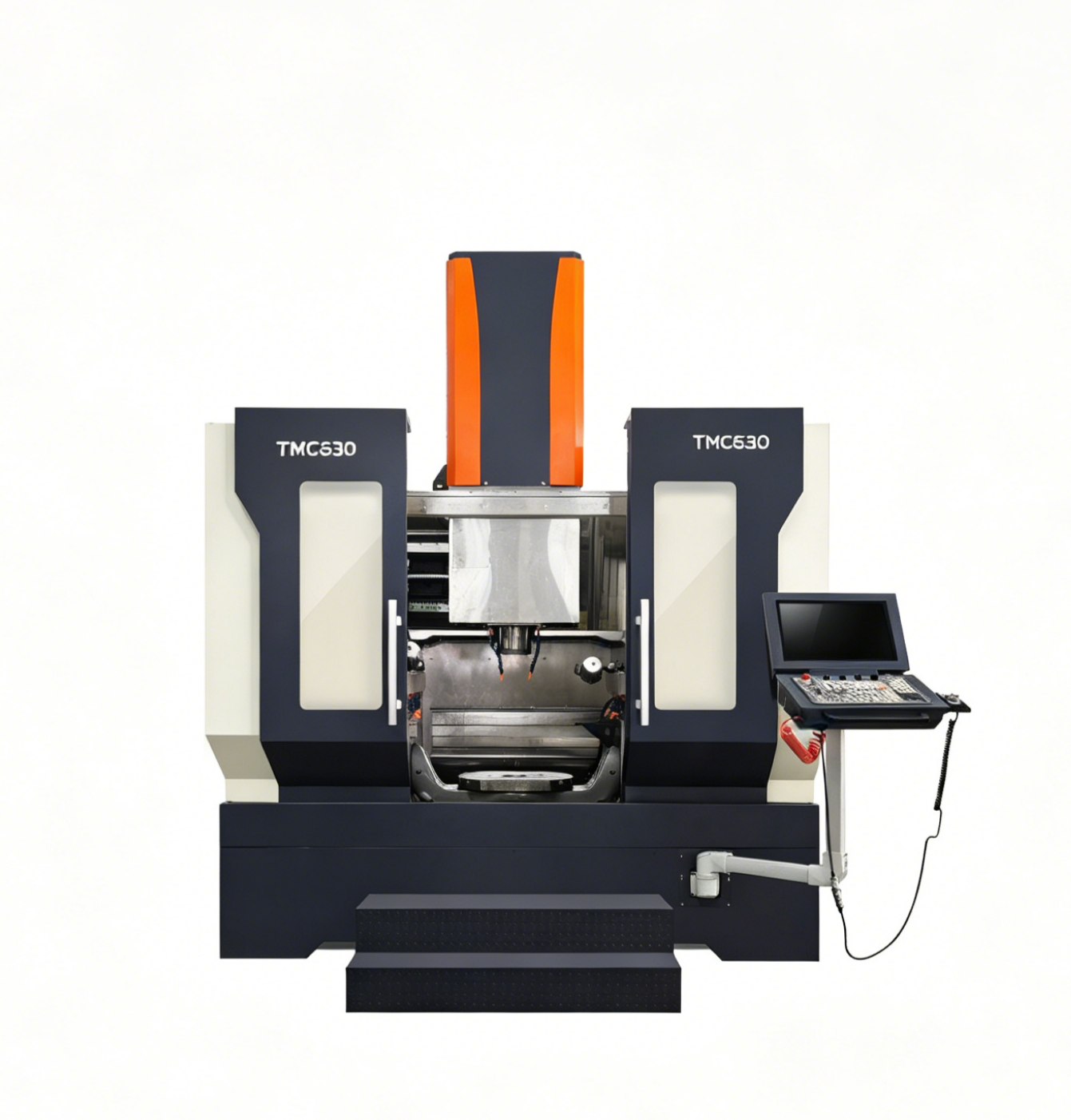
What the Axis Travel Actually Means
The published travels are 700 mm in X, 350 mm in Y plus a 590 mm tool-change stroke, and 550 mm in Z. That second number confuses people who are used to reading a single Y figure, so it is worth separating.
The 350 mm is the working Y envelope. It is the distance the spindle can move across the table while cutting, and it sets how far off-center you can reach on a part clamped to the C-axis table. The 590 mm is the additional travel reserved for the tool changer, so the spindle can retract clear of the work, index to the magazine and come back without the part or the fixture being in the way.
Practically, that lets you put a 650 mm part on the table, machine a pocket at the rim, then swing to the opposite side without unclamping. On a three-axis VMC the same job means two setups and a re-indicated datum.
The Rotary Table: 650 mm, 500 kg, 400 rpm in C
The C-axis table measures 650 mm across with a 500 kg allowable load. Two numbers matter more than the diameter.
First, C-axis rotation is a full 360° with a maximum speed of 400 rpm. That is fast enough for genuine turning work, not just angular positioning. You can rough and finish an OD on the same machine that mills the flats and cross-holes into it.
Second, the A-axis tilts to ±110° at up to 100 rpm. The extra 20° past vertical is what separates a useful five-axis machine from a four-axis one. It lets a short, stiff tool reach the back face of a part or approach a feature that would otherwise need a long, chattering extension.
For parts with intersecting holes at compound angles — hydraulic manifolds, valve bodies, pump housings — that range removes most of the angled fixturing that eats a shop’s day.
Spindle: HSK-T63 at 15,000 rpm
The spindle takes HSKT63 toolholders and turns to 15,000 rpm. HSK-T63 is a taper-and-flange interface with simultaneous face and taper contact, which holds stiffness at higher speeds and repeats tool length closely enough that pre-set tooling stays predictable after a change.
15,000 rpm is the sensible ceiling for a machine this size: enough for small-diameter carbide in aluminium and for finishing cuts in steel and cast iron where the tool, not the spindle, is the limit.
If your work is mostly 40–80 mm face milling in mild steel, the 15,000 rpm top end costs you nothing. If you run a lot of Ø6 mm and under in aluminium, it is the difference between a productive cut and a burnt edge.
Typical Work for a Machine This Size
The 650 mm table and 500 kg load put the TMC630 in the bracket of medium-complexity parts rather than huge ones:
- Valve bodies and hydraulic blocks with ports on five faces
- Pump and motor housings requiring a turned bore concentric to milled mounting pads
- Small impellers and bladed components where the blade root blends into a turned hub
- Mold inserts and tooling blocks with angled slides and cores
- Automotive and agricultural linkage parts with compound-angle bores
- Medical and instrumentation housings with tight true-position callouts
The common thread is a turned surface and a milled surface sharing a tolerance. That is where a mill-turn platform pays for itself: the second operation disappears.
Specifications
| Parameter | TMC630 |
|---|---|
| X-axis travel | 700 mm |
| Y-axis travel | 350 mm + 590 mm tool-change stroke |
| Z-axis travel | 550 mm |
| A-axis tilt range | ±110° |
| C-axis rotation | 360° |
| C-axis rotary table diameter | 650 mm |
| Table allowable load | 500 kg |
| C-axis maximum speed | 400 rpm |
| A-axis maximum speed | 100 rpm |
| Spindle taper | HSKT63 |
| Maximum spindle speed | 15,000 rpm |
How It Compares Inside the BONANZA Five-Axis Range
Three machines in the same family overlap, and the choice usually comes down to part envelope rather than features.
The TMC800 shares the same A/C configuration and HSKT63 spindle at 15,000 rpm, but opens the travels to 850 / 1,040 / 600 mm and carries roughly 11 tonnes of machine mass. If your parts sit consistently above the 650 mm table, that is the step up.
The U320 takes a different route: a dual direct-drive rotary table with a Ø320 mm mounting flange, 150 kg load and 1,100 / 650 / 650 mm travels. Smaller parts, faster table dynamics, a 12,000 rpm spindle.
The LH500 steps down to a Ø500 mm table and a 350 kg load, but opens Y travel to a full 1,000 mm with a 12,000 rpm spindle — a better fit for longer parts that need to be walked along the table.
The full lineup is on the TMC630 product page, and shops that need turning plus milling on longer shafts should also look at the 2100LY mill-turn machine with its interpolation Y-axis.
Setup Notes Before You Buy
Five-axis work fails on fixturing more often than on the machine. Three things to plan for.
Balance the load. A 500 kg capacity is generous, but an unbalanced fixture on a table spinning at 400 rpm will show up as vibration long before it shows up as an alarm.
Keep the tooling short. The A-axis tilt is there so you can reach awkward faces with stubby tools. If your process plan still calls for long extensions, the tilt range is not being used.
Decide on the turning side early. If the part needs bar feed or a tailstock, plan that against the table and load figures before the machine is specified, not after.
Frequently Asked
Can the TMC630 turn and mill in the same cycle? Yes. The C-axis rotates at up to 400 rpm for turning, and the same table positions the part for milling without a re-clamp.
What is the largest part it will take? The table is 650 mm in diameter with a 500 kg allowable load. Keep the swing and fixture mass inside those two limits.
Does the 350 mm Y travel limit five-axis work? It limits how far off the table center you can reach, not the tilt. Most parts under 650 mm diameter fall inside it.
Next Step
If your current process is a lathe plus a VMC plus a fixture that nobody wants to set up twice, send us the drawing. We will tell you whether the TMC630 envelope covers it or whether the TMC800 is the honest answer. Request a quote or a process review.