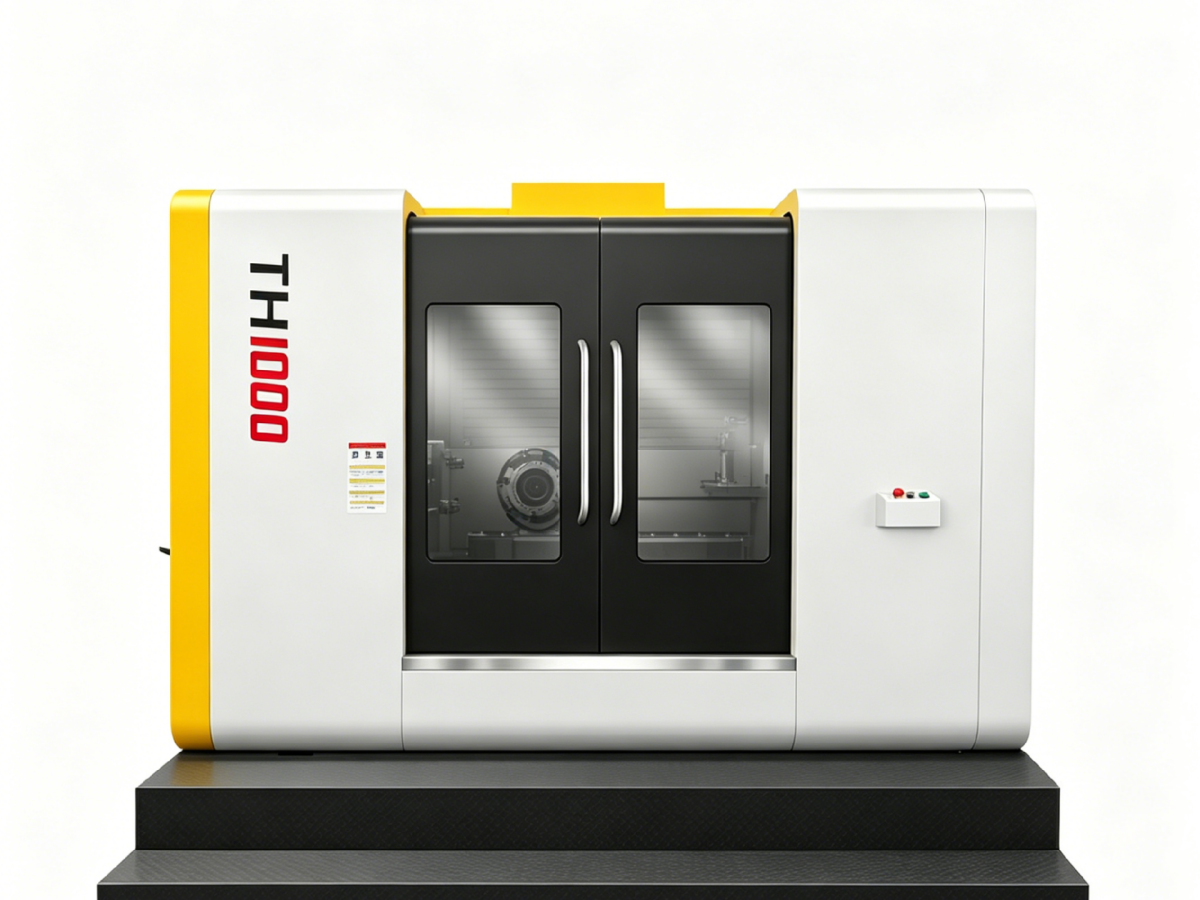
TH1000 Horizontal Machining Center – Configurable Frame for Box, Valve and Mold Work | BONANZA CNC
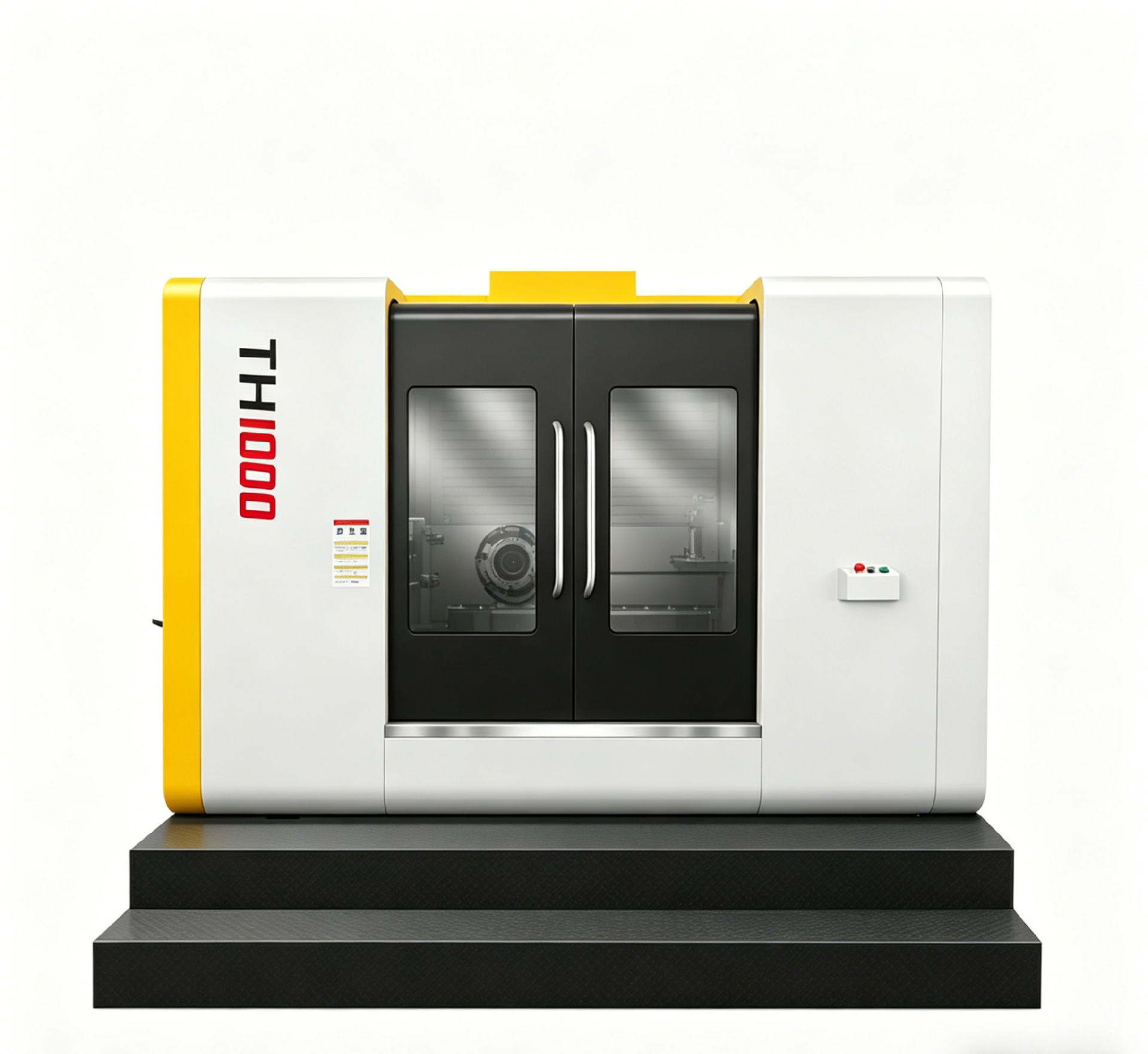
Box housings, valve bodies, mold bases. If these show up on your shop floor more than once a week, you already know the drill: four or five faces to machine, tight bore tolerances, and a workpiece that is too heavy to flip by hand. A vertical machining center can reach two faces comfortably. Everything else means another setup, another round of indicating, and another chance for error to creep in.
The BONANZA TH1000 horizontal machining center is aimed squarely at that kind of work. Its defining feature is not a headline spindle speed or a giant table. It is that the machine can be built around your part. The frame is available in boring-mill, positive T, and inverted T layouts, so the axis arrangement can be matched to how you actually load and cut the work.
One machine, three frame layouts
Horizontal machining centers are usually sold as a fixed configuration. The TH1000 takes a different route: the structure itself is a selection. The three layouts differ in how the axes are arranged and where the work sits relative to the column, and each one suits a different production pattern.
Boring and milling structure. This is the classic horizontal boring-mill arrangement. The spindle is set up to take long boring bars and interrupted cuts, which makes it the natural pick when precision bores and counterbores carry the job. Valve bodies, pump housings, anything with a bore chart.
Positive T structure. A layout that keeps the footprint compact and gives predictable front access for loading heavy castings. Shops running medium batches of gearboxes and manifolds tend to land here.
Inverted T structure. A different split of axis movements, which pays off when parts are long in one direction or when you want to index several faces around a rotary axis. It is also a common choice for die and mold work, where the tool has to reach into deep cavities from different angles.
Honestly, the difference between the layouts is easier to judge with a drawing in front of you than from a paragraph. If you are not sure which one fits, that is a normal starting point: send a sample part print to the BONANZA team and they will spec the frame around the work instead of expecting you to reverse-engineer the brochure.
What the TH1000 is actually for
The machine is not trying to be everything. Its sweet spot is three workpiece families:
- Box bodies and housings. Gearboxes, hydraulic valve blocks, motor housings. These need faces squared to each other and bores held on a common axis.
- Valve bodies. Multi-port valves mean multiple sealing faces at different angles. A horizontal spindle reaches them in one or two setups instead of five or six.
- Molds and dies. Deep cavities, angled walls, and a lot of material to remove before the finishing pass. The horizontal orientation keeps chips out of the cut and the tool short and stiff.
All of these share the same demand: multi-face, multi-angle machining with real boring capability. That is the workload the TH1000 is configured for, and it is also the workload that wears out a VMC operator’s patience fastest.
Why horizontal beats vertical for these parts
It is worth restating the basics, because they drive every buying decision in this category:
Chips fall out on their own. On a horizontal machine the chips drop straight off the face being cut. They do not sit in a pocket getting recut or wrap around the tool, and the operator is not stopping to blow them out. In deep-cavity mold work this alone can shorten cycle time noticeably.
One setup, many faces. With a rotary table or indexer, the TH1000 presents a new face to the spindle without the part leaving the fixture. Squareness between faces stops depending on the operator and starts depending on the machine’s geometry.
Boring is the native language. A horizontal spindle holds a boring bar along the axis of the bore, which is exactly where you want it. Bore runout and taper stay consistent because the tool and the hole are aligned by the machine, not by a right-angle head bolted onto a vertical spindle.
Where TH1000 sits in the family
TH1000 is the configurable core of the BONANZA horizontal line. If you want a pre-specified machine with fixed travels and load ratings, the S-series models carry the published numbers:
| Model | Table size | Max. load | Spindle | X / Y / Z travel | Weight |
|---|---|---|---|---|---|
| TH500 | 1200 × 600 mm | 800 kg | BT40 | 1100 / 750 / 650 mm | 7,200 kg |
| TH1000S | 1000 × 1000 mm | 4,000 kg | BT50, 3000 rpm | 1800 / 1000 / 1300 mm | 16,000 kg |
| TH1400S | 1400 × 1400 mm | 5,000 kg | BT50, 2000 rpm | 1800 / 1300 / 1500 mm | 19,500 kg |
| TH1600S | 1600 × 1600 mm | 10,000 kg | BT50, 1500 rpm | 2000 / 1500 / 1800 mm | 24,000 kg |
The pattern across the S-series shows how BONANZA scales its machines: table load goes up, spindle speed comes down, and the frame gets heavier. Bigger workpieces in harder materials want torque and mass rather than RPM. The TH1000 platform follows the same logic, except the frame layout is left open so the machine can match the process instead of the brochure.
A few questions that decide the configuration
When a shop asks about the TH1000, the useful questions are not about the machine alone. They are about the parts:
- How many faces need machining in one clamping?
- Are the critical features bores, and what tolerance do they carry?
- What is the typical batch size? One-off repair work or repeating production?
- Does the part change shape often, or is it a stable product line?
High-mix shops usually lean toward the boring-mill or positive T layouts for flexibility and easy loading. Shops with a stable product and a rotary-table mindset often get more from the inverted T arrangement. Either way, the supporting decisions are the same: control package, tool magazine capacity, chip conveyor. BONANZA can quote the machine around those answers.
Get a configuration proposal
If you are machining boxes, valve bodies, or molds and you are tired of fighting setups on a VMC, the TH1000 is worth a closer look. Send your part drawings or a rough description of the workload to the BONANZA sales team, and you will get back a suggested frame layout, axis travels, and spindle option — matched to your parts, not to a price list.
You can also compare the whole range on the horizontal machining centers page, or read about the heavy end of the family in our TH1600S breakdown.