HMC1000 Horizontal Machining Center – 1,000 x 1,000 mm Pallet with a 3,500 kg Load and a BT50-190 Spindle | BONANZA CNC
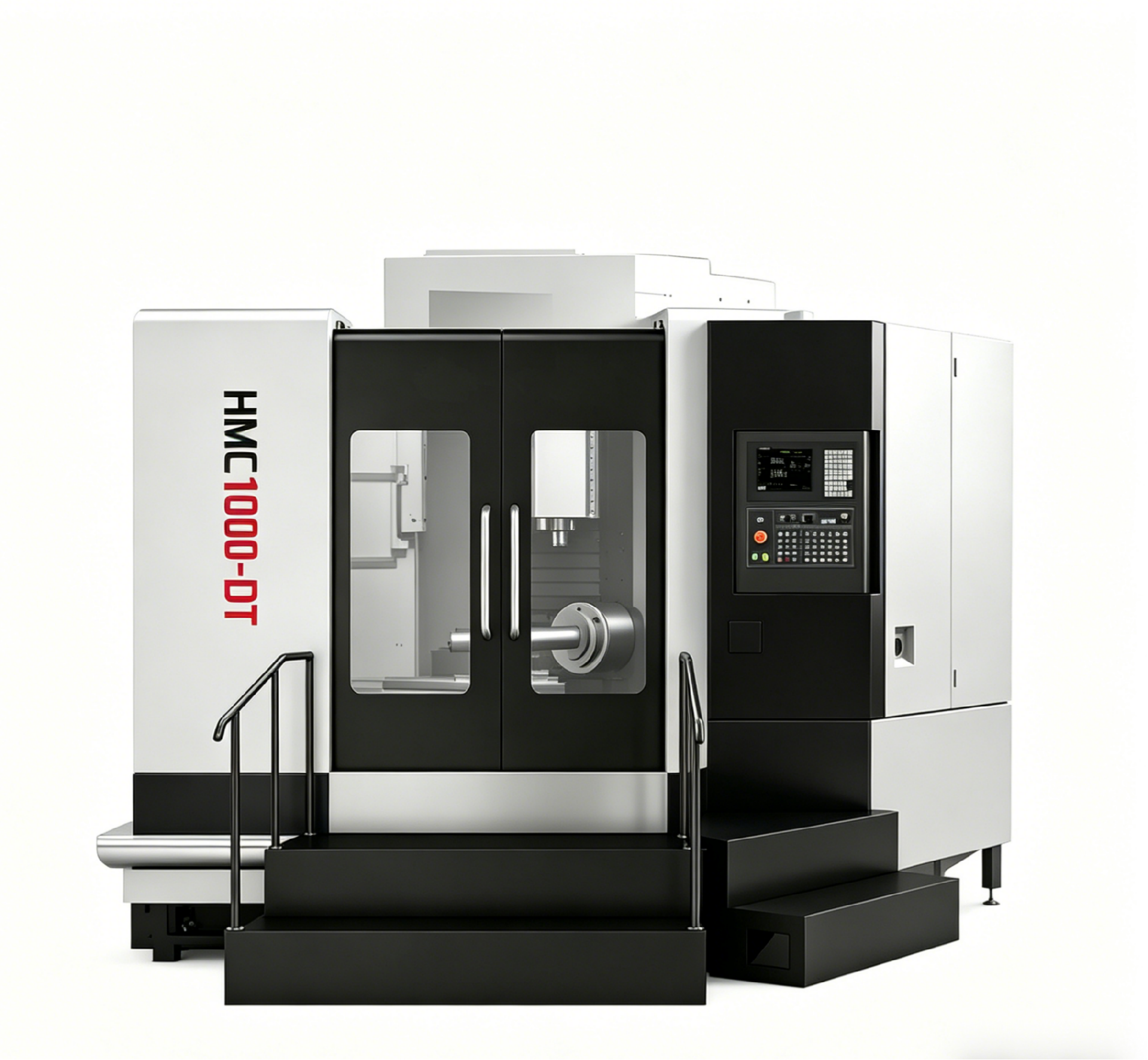
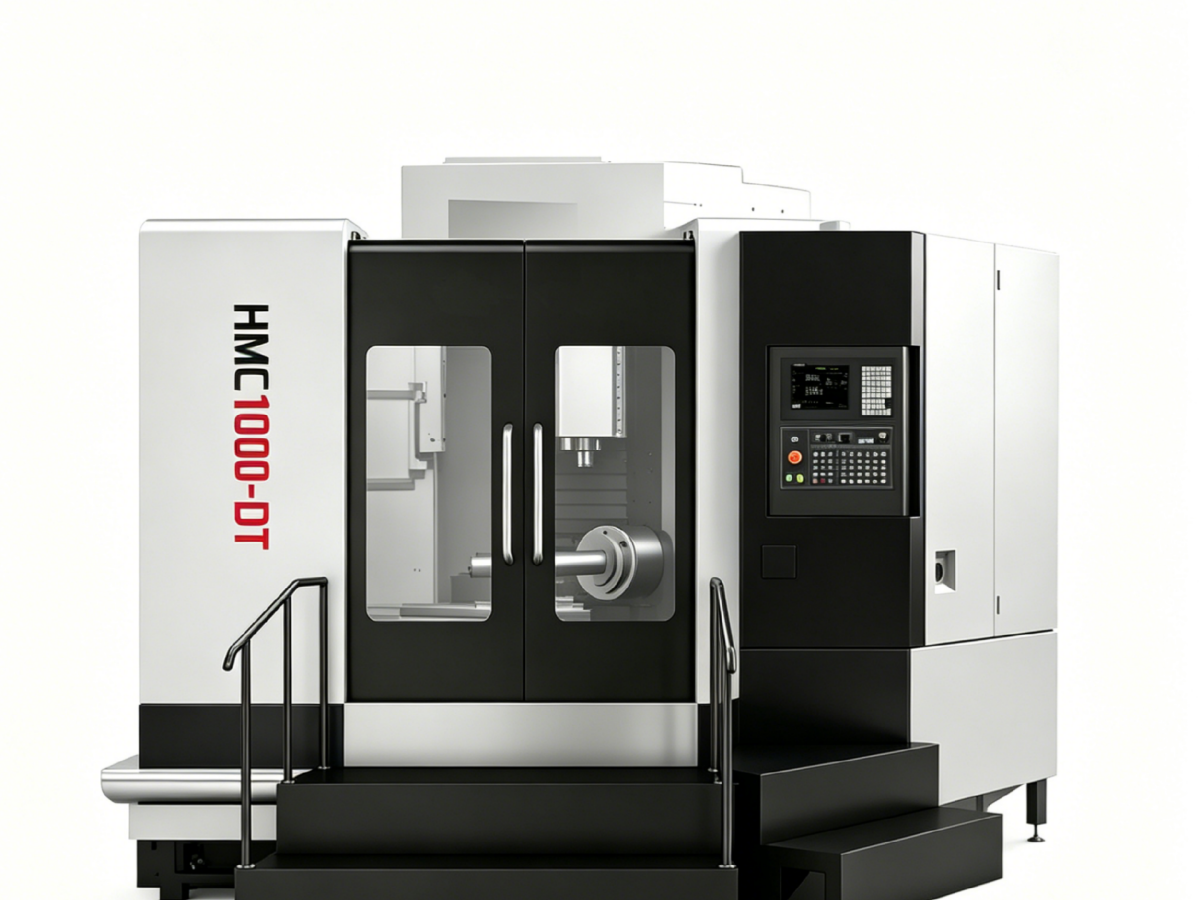
The jump from an 800 mm pallet to a 1,000 mm pallet is not just 200 mm of extra table. On a horizontal, that step usually means a heavier frame, a longer Z stroke and a pallet that can carry real tonnage. The HMC1000 sits in exactly that slot, and it does it with a 6,000 rpm BT50 spindle rather than the slow 45° spindle that most machines above 1,000 mm pallets use.
Table size is 1,000 x 1,000 mm with a 3,500 kg load rating. Travels are 1,300 mm on X, 1,100 mm on Y and 1,200 mm on Z, with rapids of 15 / 12 / 15 m/min and a BT50Φ190 spindle turning 6,000 rpm. Machine weight comes in at 18,000 kg. Here is where those numbers actually matter, and how the machine compares with the rest of the 1,000 mm class.
Pallet, travels and what fits on it
A 1,000 x 1,000 mm pallet at 3,500 kg covers a lot of general engineering work. Large pump and valve bodies, gearbox housings, machine bed castings, mould bases and fixtures for parts that will not fit a 630 mm machine. The T-slot pattern is 7-22-125 mm, which is the same spacing as the larger TH1400S, so fixture plate design carries across those two machines without redrilling.
The X stroke of 1,300 mm against a 1,000 mm pallet leaves 300 mm of overhang at each end of the travel. That is the margin you use to reach both end faces of a long housing without repositioning. Z at 1,200 mm is worth comparing carefully, because the two other 1,000 mm machines in the range do not simply match it. The 1000S-DT and the TH1000S go to 1,300 mm of Z, but they do it with a 45° BT50 spindle that tops out at 3,000 rpm and a 4,000 kg pallet. Here the stroke and the 6,000 rpm spindle come together, which is the combination that matters when a part is deep and the finishing operations are still speed-sensitive.
The 3,500 kg rating is the practical ceiling for pallet plus fixture plus part. It is comfortable for heavy castings, and it sits between the 800 mm machines at 2,000 to 2,500 kg and the 4,000 kg class above it.
Spindle and structure
The spindle is BT50 with a 190 mm outer diameter and a top speed of 6,000 rpm. It is the same nose as the 630-DT and the HMC630II-ZT, while the 800-DT goes slightly larger with a BT50-200 at the same 6,000 rpm. Compared with the 45° BT50 machines further up the range, which top out at 3,000 rpm and below, a 6,000 rpm power drawbar spindle is a different proposition: you keep usable speed for aluminium and finishing work while still having the taper and nose diameter to run a 100 mm face mill in cast iron. The X axis moves at 15 m/min and Y / Z at 12 / 15 m/min. On a machine this size, X is usually the long move between features, so 15 m/min there is the sensible place to spend speed.
The frame comes in three arrangements: a boring and milling structure, a positive T-structure and an inverted T-structure. Which one is quoted depends on the parts, and on a horizontal that choice matters more than most of the numbers on the data sheet. All three target box bodies, valve bodies and moulds, and processes such as multi-face and multi-angle machining, boring and U-shaped brick drilling, where the part stays clamped and the pallet indexes through the faces.
HMC1000 specifications
| Table size | 1,000 x 1,000 mm |
| Max. worktable load | 3,500 kg |
| T-slot (number x width x distance) | 7-22-125 mm |
| X / Y / Z travel | 1,300 / 1,100 / 1,200 mm |
| X-axis rapid traverse | 15 m/min |
| Y / Z rapid traverse | 12 / 15 m/min |
| Spindle taper hole | BT50Φ190 |
| Spindle speed | 6,000 rpm |
| Machine weight | 18,000 kg |
Where it sits in the horizontal range
The table below lines the HMC1000 up against the neighbouring models. Every figure is taken from the individual product page.
| Model | Pallet | Load | X / Y / Z travel | Spindle | Rapid X / Y / Z | Weight |
|---|---|---|---|---|---|---|
| HMC1000 | 1,000 x 1,000 mm | 3,500 kg | 1,300 / 1,100 / 1,200 mm | BT50Φ190, 6,000 rpm | 15 / 12 / 15 m/min | 18,000 kg |
| 800-DT | 800 x 800 mm | 2,500 kg | 1,300 / 1,150 / 1,000 mm | BT50-200, 6,000 rpm | 12 / 12 / 12 m/min | 16,000 kg |
| 800S-DT | 800 x 800 mm | 2,000 kg | 1,300 / 1,000 / 1,000 mm | BT50-45° | 15 / 12 / 12 m/min | 15,500 kg |
| 1000S-DT / TH1000S | 1,000 x 1,000 mm | 4,000 kg | 1,800 / 1,000 / 1,300 mm | BT50-45°, 3,000 rpm | 14 / 12 / 14 m/min | 16,000 kg |
| TH1400S | 1,400 x 1,400 mm | 5,000 kg | 1,800 / 1,300 / 1,500 mm | BT50-45°, 2,000 rpm | 14 / 12 / 14 m/min | 19,500 kg |
| TH1600S | 1,600 x 1,600 mm | 10,000 kg | 2,000 / 1,500 / 1,800 mm | BT50-45°, 1,500 rpm | 12 / 12 / 12 m/min | 24,000 kg |
Two points come out of that table. First, the 1,000 mm pallet appears twice with very different intent. The 1000S-DT and its TH1000S counterpart carry 4,000 kg and give up 500 mm of spindle speed to get there, which suits heavy cast iron with long cycle times. The HMC1000 trades 500 kg of load for a 6,000 rpm BT50Φ190 spindle and keeps more usable Z. Second, the 45° spindle takes over from 800S-DT upward, and top speed then falls machine by machine as pallet size climbs, from 3,000 rpm at 1,000 mm to 1,500 rpm at 1,600 mm. Above 1,000 mm pallets, the range is built for weight rather than for finishing feed rates.
Picking between the near neighbours
If the heaviest part plus fixture lands under 2,500 kg and the pallet can stay at 800 x 800 mm, the 800-DT already carries a BT50-200 spindle at 6,000 rpm with the same 1,300 mm of X travel, so the 1,000 mm pallet only buys you space, not capability. The step up to the HMC1000 is worth taking when the footprint of the part genuinely needs the 1,000 mm pallet, when Z depth beyond 1,000 mm is needed, or when the fixture ganging that comes with the bigger table pays back in setup time.
If instead the parts are heavy and cubic, and machining is dominated by roughing with a few large tools, the 1000S-DT at 4,000 kg and 1,800 mm of X travel is the more sensible machine, on the understanding that the 45° spindle tops out at 3,000 rpm. Beyond that, the TH1400S at 1,400 mm covers the 5,000 kg class.
What the published sheet leaves open
The data published for the HMC1000 covers the envelope, table, spindle interface, travels, rapids and machine weight. Several items that drive price and process planning are not listed and should be confirmed in writing before an order:
- Spindle motor power and the torque curve behind the 6,000 rpm figure. Taper and top speed are published; the drive rating is not.
- Tool magazine capacity, tool-to-tool change time, and the maximum tool diameter and weight the magazine accepts.
- Pallet changer configuration, and whether a two-station APC is standard or optional on the structure you select.
- Which of the three frame arrangements (boring and milling, positive T, inverted T) is quoted as standard for a given application.
- Positioning and repeatable positioning accuracy, and the inspection standard the figures are certified against.
- Control model and version, plus the standard and optional list covering chip conveyor, through-spindle coolant and spindle oil cooler.
- Overall dimensions, needed for foundation and shipping planning.
On a horizontal this list matters more than on a vertical, because the pallet changer and the tool magazine are usually the two largest cost items after the base machine. Ask for both line by line, with the frame arrangement named explicitly.
Bottom line
The HMC1000 is the flexible 1,000 mm machine in the range: a 3,500 kg pallet, 1,200 mm of Z, and a 6,000 rpm BT50Φ190 spindle that keeps finishing speeds available while still having the nose diameter for heavy milling. It suits box bodies, valve bodies and mould work where the part is large but the machining is mixed rather than pure roughing.
Full details are on the 1000 Horizontal Machining Centers product page, and the other models are listed under Horizontal Machining Centers.
Send a part drawing with the fixture weight, the frame arrangement you have in mind and the annual volume, and the pallet changer, magazine and accuracy package can be confirmed in writing for your application. The team is reachable through the contact page.