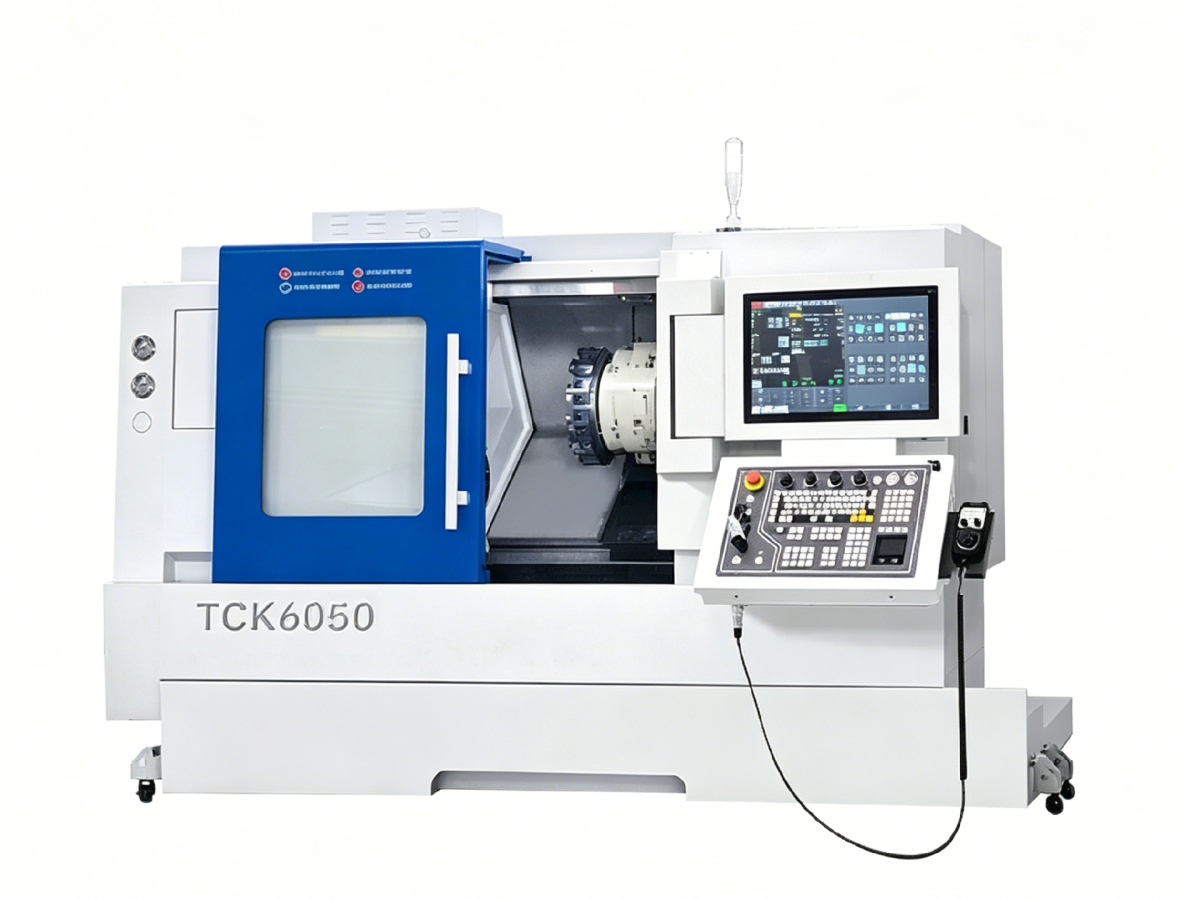
When choosing a CNC lathe, one of the first decisions is the bed configuration: slant bed or flat bed. Both turn parts, but they are engineered for different priorities.
What Is a Slant Bed Lathe?
In a slant bed lathe, the bed is angled (typically 30° to 45°), so the turret and tailstock sit on an inclined plane. This is the dominant design in modern CNC lathes, and for good reason.
Key Differences
Rigidity and Cutting Force
Slant bed designs allow heavier, more rigid structures. The cutting forces are directed into the bed more effectively, which means better stability during hard turning and interrupted cuts. This is why BONANZA slant bed lathes like the TCK50 and TCK6050 handle demanding materials without chatter.
Chip Removal
Chips fall naturally down the inclined bed into the chip conveyor. For high-volume production, this is a huge advantage — fewer stoppages, cleaner cutting zone, longer tool life.
Precision
The inclined structure with linear guides delivers excellent positioning accuracy and repeatability, essential for shafts, flanges and precision components.
Cost
Slant bed lathes are generally more expensive than flat bed machines of similar size. Flat bed lathes remain a budget-friendly choice for simple, low-volume turning.
Which One Should You Choose?
- High-volume production — slant bed. The chip management and rigidity pay off quickly.
- Precision shafts and flanges — slant bed. Models like the TCK6350D and TCK80D deliver the accuracy you need.
- Simple, occasional turning — flat bed can be adequate, but consider future growth.
- Turn-mill combined work — a slant bed turn-mill center like the TCK6050SY or HTMC series adds milling capability in one setup.
Talk to Our Engineers
Not sure which lathe matches your parts? Send us your drawings and our team will recommend the right model with a factory-direct quote. Contact BONANZA today.